
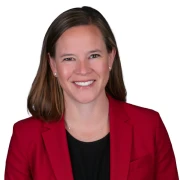


Matt and Janna Splitter have a plan. In 20 years, they are going to retire.
“I see the older farmers, and I just don’t want that to ever be me,” Matt says.
The timeline set their strategy — build a team, foster a culture that reflects them, and give accountability and empowerment to their crew. Then they’ll retire at 62 and 59, respectively.
“We’re just good people who took a 1,000-acre farm, and last year, we seeded 21,000 acres. We couldn’t do it without the culture. We couldn’t do it without business acumen. We couldn’t do it without our team,” Matt says.
For their achievements in farm business management, the Splitters were named a 2026 Top Producer of the Year finalist, an award sponsored by BASF and Fendt.
Matt is the fifth generation to work the ground originally homesteaded by his great-great-grandfather, Wilhelm Splitter, near Lorraine, Kan. Matt and Janna, who grew up nearby in Sterling, both attended Kansas State University. After graduation, Matt went to work for the National Sorghum Producers and Janna for the local Farm Service Agency, with no fixed plan to farm full time.
A series of events led them to build their farm business.
First, it started with a sudden return to the farm after Matt’s father, Melvin, passed away in 2010. Matt and Janna planted their first crop — winter wheat — in 2011, on the operation’s original 1,400 acres, while both still held off-farm jobs.
Custom work nobody else wanted provided a bridge to full-time farming. Matt and Janna cold-called neighbors who needed planting or harvest done. The no’s outnumbered the yes’s for a long time, until enough yes’s added up to the point that Matt could leave his job with National Sorghum Producers. Janna worked off farm several years longer — first at the Farm Service Agency and later in agricultural lending — before transitioning to the farm full time.
From there, a transformative mentorship opportunity with Lee and Margaret Scheufler led to a multi-year transition.
“The reason our farm grew is because it wasn’t family, but still, we were treated like family,” Matt says. “Someone took a chance on us.”
The Scheuflers gave them greater opportunity and the conviction a non-family crew can carry an operation.

Success is Being Wanted, Not Needed
Today, the Splitters are the first to say, they don’t think of themselves as farmers first. They are business owners. That perspective is the foundation on which they built their business, how they structure their daily lives and how they make management decisions.
“It’s the day I’m the least important person on the [place]. Where I’m not needed but still wanted,” Matt says.
Scale brought business growth, but culture is the engine that delivers the Splitter’s definition of success.
“One day I walked into the office, just like a normal employee, and set something in Janna’s basket. Janna and Braxton [the farm manager] were having a talk about strategy,” Matt recalls. “I walked out, not because I was irritated, not because I was upset. I didn’t have to be part of that conversation. I thought, ‘It’s working. This is working. This is absolutely working.’”
As a second anecdote, before leaving on a family spring break trip to Mexico, Matt told the crew if they called him while he was gone, they were fired. No one called, even when they were struggling to fix something.
As they recounted to him, “We all stood there and looked at each other like, man, we miss Matt,” he says. “They recognize they have somebody they can turn to if they need it. But they don’t need me. They don’t need us. They’ll figure it out.”
The Splitters say building trust and self-confidence have taken time and self-reflection on their management.
“I used to be a micromanager,” Matt says. “There’s no way to count how many times I’ve said to everyone on the farm, including Janna, ‘I don’t care what decision you make, I trust you. I trust that the decision you make is the right decision.’”

We Don’t Hire Warm Bodies
One operating rule for the business is to hire for the culture — it sets the standard when bringing on new team members. Two full-time seats sat open through a drought harvest because the crew itself wouldn’t settle for a bad fit — and the crew, not the owners, enforced it.
“Are we more concerned about getting a warm body here and having a person, or are we more concerned with getting the right person? What’s the threshold? What’s the timeline? Where’s that break-even point?” Janna says.
The crew worked through the vacancies endorsing the time it took to find the right fit. In the hiring process, the focus has become much more about the person — not their current skill set.
“Now I feel more confident we have the right people on the bus, and that we’re getting people in the right seats. About half of them are in the right seats, the other half are actively pursuing a seat,” Janna says.
Today, the Splitter Farm crew spans five decades – employees with 50+ years of experience alongside employees barely out of their teens.

The Backbone for Challenging Times
As the Splitters deal with the aftermath of the area’s second-driest July and August on record, thanks to a strong El Niño, the tough decisions, poor yields and red ink are adding to the stress — both interpersonal and financial.
“[The weather pattern] might be great for the Corn Belt, but it’s death to Kansas when the heat dome sets in,” Matt says.
It isn’t the first time the operation has held steady through a bad stretch. In 2014 and 2015, falling commodity prices and uncollected account receivables created a perfect storm. The Splitters went to their lender, restructured and rebuilt their financial processes from the ground up. The next year, cash flow came in ahead of projections. The lesson Matt still points to: The speed of correction matters more than the speed of growth.
Matt and Janna say it’s in the tough times when their investments and intentionality about culture pay off. But it doesn’t make hard decisions any easier.
“At the end of the day, 90% of the success of the farm hinges on things we can’t control. Just because it doesn’t rain for 60 days doesn’t mean our farm manager didn’t put in 90 hours a week,” Matt says.
He applies a lens that employee pay shouldn’t be indexed to a P&L the employee can’t influence. It’s about performance metrics they can control — attitude, additional skills, leadership and being a team player.
“Because the farm is not profitable this year doesn’t mean he’s not worthy of the pay increase?” he says. “I’ve always pushed back hard on paying bonuses to employees based upon the financial success of the farm.”
Janna says managing their team requires a lot of honesty to balance everyone’s work and personal lives.

The Heartbeat of the Operation
Janna’s title is co-owner and controller, but her portfolio runs closer to chief of staff: bookkeeping, payroll, taxes, crop certification and USDA program compliance, landlord relations and, increasingly, the farm’s public voice.
Matt doesn’t separate his own recognition from hers.
“If anyone gives me an award without recognizing Janna, I won’t accept it,” Matt says.
Older Brothers Step Up
“We knew from the get-go this business was going to grow at the same rate as our family,” Janna says. “Our kids are going to be around, and when we’re at work, there’s a possibility they’re going to be here too.”
The tenured crew — many only two to five years in — has become family in a literal, load-bearing way, and that’s the outcome the Splitters were aiming for from the start.
“These guys are like older brothers for our kids. They come to softball games and support our girls. They set up the slip ‘n slide and air up tires for their bikes and side-by-sides. They know our girls’ friends. They go eat dinner with our family and truly become an extension of us. This is the way we always hoped it would be for the team we built around us,” Janna says.

Welcome Mat, Not Doormat
The relationship-first growth strategy that got them to 13,000 acres is starting to cost them, and they’re now screening landowners the way landowners once screened them. They’ve already given up ground, and they expect to scale back more.
“We focused so much on how landowners would interview us, how landowners would see us, and now I think it’s the opposite. Now we need to focus on how we interview them,” Matt says.
Janna adds: “We have treated every landowner like they are our favorite. No one knows who our favorite is. Now it’s time to address some of our relationships differently.”
The first parameter when it comes to dropping acres is based on the quality of the landlord relationship. Measured on communication, honesty, and personality match, the Splitters say they’re ready to assess agreements based first on relationship, followed by profitability, second and geographic distance, third.
“I want to tell them: Your 80 acres doesn’t define my happiness,” Janna says. “My life is so much more full than what I do at this farm. That does not mean this farm is not important to me. But there’s so much more to each of us as individual people than just, yeah, Matt is a farmer. Matt is an incredible dad. Matt is a friend. Matt is a good person. Matt looks out for the little guy. … Matt’s a good business owner. It just happens to be in ag.”
What Happens if They’re Not There
The Splitters have done more than draft a checklist for succession — they’ve built continuity, and that’s where culture earns its keep. Matt and Janna are clear there’s no expectation that either daughter will run the farm one day. The real question is whether the thing they built survives the founders.
“We’ve had the talk. What if Matt wasn’t here? What if Janna wasn’t here? I wholeheartedly believe this place would still run without us,” Matt says.
There would be learning curves, he adds, but making adjustments while staying rooted to their values has always been part of the Splitter Farms story.
“It’s the understanding of culture. It’s the understanding of putting people in the right place to make the decisions,” Matt says. “Does the farm define us, or do we define the farm? It goes back to empowerment. Our team defines our farm — we just get to the be the leaders who help everyone realize that.”

This past year, Splitter Farms completed a capital investment in the farm’s culture. It’s a 1,600 square foot office located at the farm’s headquarters.
“It’s the gathering place,” Janna says.
The farm office gives Splitter Farms a professional environment for their team, landowners and vendors.
But it’s also an extension of their culture.
“Our kids [daughters Laikyn and Landry] have been coming and going all summer long — the kids will hide behind the corner of something and jump out and scare the guys as they came in. It became their goal to jump-scare them every time. This is their version of a second home,” Janna says.
It’s just one more illustration of the balance that is so important at Splitter Farms — family atmosphere and professional opportunities.

The Splitters treat the farm as a public space. In 2024, they hosted more than 75 teachers through Kansas Corn’s Seed to STEM program. Over the years, they’ve welcomed more than 30 international visitors — from China, Japan, Mexico, Israel, Spain and Morocco — as well as a 20-member delegation from Ukraine that toured during the war, around the same time their church in Rice County was helping resettle Ukrainian families who’d come to the U.S.
Matt has carried the same instinct into public service: a seat on the Kansas Corn Association board, an appointment to the FCC’s Precision Ag Connectivity Task Force, and, in 2023, testimony before the U.S. House Committee on Small Business on rural entrepreneurship. Since 2016, Janna has volunteered with CommonGround Kansas, a farmer-to-consumer advocacy program.



