

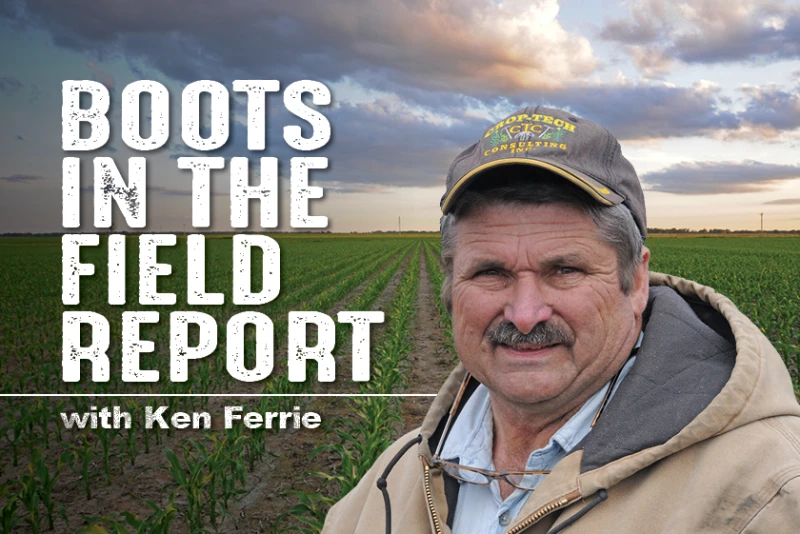
Soybean crops are fast disappearing across Illinois, as combines roll through fields finishing up the 2024 harvest, says Ken Ferrie, Farm Journal Field Agronomist.
One concern he has, however, is the amount of heavy dust coming out of equipment going across dry fields.
“I’m not sure if I’ve ever seen a year with this much dust on the beans; the horizon looks like a bunch of brush fires with the amount of dust coming out of these combines,” he said on Friday during his weekly Boots In The Field podcast.
“As we finish up the beans and move to corn, everyone will need to have a contingency plan for field fires if it doesn’t rain soon,” he advises. “Combine downwind, if possible, on windy days so if we have a combine fire it burns away from the crop.”
Dry Conditions Are Extensive
While intense, heavy rains from hurricanes have lashed parts of the Southeast, the past week was extremely dry over a large majority of the contiguous 48 states, according to the U.S. Drought Monitor released on Thursday.
“Between 0.5” and 1.5” of rain fell on a small swath extending from west-central Illinois through southeastern Iowa last week,” the Monitor reports. “The rest of the Midwest region reported very light amounts at best, and most locations experienced a dry week with no measurable rain.”
The abnormally dry conditions can enhance the potential for combine and field fires this fall, reports Iowa State University Field Agronomist Joshua Michel. Low relative humidity levels and high winds can further increase the risk of fires.
According to the state’s Department of Natural Resources, Iowa is seeing dry conditions for this fall with relative humidity dropping down to dangerous levels for wildfires and ignition sources in the fields. Higher afternoon temperatures are also expected with the National Weather Service issuing both Red Flag Warnings and Fire Weather Watches across Iowa.
“All it takes to start a fire is a single high-temperature source in the engine area or an overheated bearing to ignite some dry plant material,” Michel reports in an online article.
Practical Steps To Prevent Fire
Keeping combine engine compartments free of debris, checking air filters, coolant and oil levels daily can help minimize the potential for a machinery fire. Removing plant materials wrapped on or near any bearings, belts, chains, or other moving parts can also help.
Michel offers additional recommendations here: Fire Prevention Tips During Harvest
Ferrie advises farmers to put together a contingency plan to prevent fires from occurring as well as a plan for steps to take if one does start.
“Having a tillage tool hooked up and ready to go is one idea, plus your crew needs to know what to do in case a fire happens,” he says.
Get Ferrie’s updates on harvest and agronomic issues he’s following in the podcast, here: Boots In The Field Report October 11, 2024
Your next reads:
The Used Machinery Sweet Spot: How To Get The Most Bang For Your Buck
Making Purchases for 2025: All You Can Do Is Your Best!
The Growing Crisis in Our Communities: Can 4-H Answer the Call?



