
Crop Production

Sponsored
If you’re noticing the signs of nitrogen deficiency in corn, when should you address it? How and when you apply nitrogen can help or hurt at harvest.

Sponsored
Is your Mid-South or Southeast cotton crop ready for harvest? Learn how to check

Sponsored
Early scouting protects corn yields from cutworms damage. Identify species and cutworm lifecycles to limit damage.

Sponsored
Learn to identify the five major insects responsible for millions of bushels of lost soybean yield.

From conventional horizontal tillage to strip-till and no-till, the key is applying a production system that can overcome each field’s weakness.

From sudden death syndrome and soybean cyst nematode to emerging red crown rot, University of Nebraska researchers are uncovering yield losses that can be difficult to not only see, but even harder to diagnose.

A hot, sunny August accelerated maturity, while timely rain around pollination helped protect some yield potential. But as harvest is now on pause, early results show extreme variability across fields and planting dates.

Warm fall conditions could push back the window for safe, effective anhydrous and manure applications across parts of the Midwest, says Iowa State agronomist.

Sulfur prices have surged more than fivefold, threatening phosphate fertilizer production. With global supply tightening, farmers could face higher prices, or even fertilizer shortages, heading into the months ahead.

Planting soybeans months before wheat harvest sounds risky. But farmers Brian Tanner and Jason Mauck find it dries wet fields faster, cuts input costs and gives wheat a profitable place back in Corn Belt rotations.

Researchers say a simple combine tweak gives farmers a way to concentrate up to 95% of their toughest weed seeds into just 5% of a field.

The answers to which hybrids, products and practices paid off may already be in your fields. The trick is stopping long enough to find them, say David Hula and Randy Dowdy.

Farm Journal Field Agronomists say adjusting yield calculations for compromised plants could reveal 20 to 40 fewer bushels per acre than what farmers in parts of the Eastern Corn Belt currently expect.

Some Midwest cornfields are losing more than a percentage point of moisture daily, tightening timelines for growers trying to determine how much crop they can confidently sell into the market rally.

Research from Michigan State University links an early seeding window and 5‑inch row spacing with more wheat heads per square meter and double‑digit bushel gains.

Saturated soils and high winds have downed corn and sparked disease risks for it and soybeans. Here is how to adjust your harvest equipment and strategy now to save yield.

Pro Farmer Crop Tour scouts discovered a corn crop that didn’t live up to expectations, with Pro Farmer pegging the national yield at 173.2 bu. per acre, well below USDA’s 180.7 current estimate.

Total acreage, labor and scouting frequency can help you determine whether owning a drone is a smart investment.

Flooding and derecho damage in the east, drought in the Plains, and a surprise USDA yield cut have this year’s crop looking more uncertain than ever right as Pro Farmer Crop Tour scouts prepare to hit the fields.

From fragile Wisconsin ground to deep Illinois prairie, Andy Benson and Ryan Frieders are adapting their soil-management practices to keep inputs working effectively, yields improving and their respective farms on course for a brighter future.

Increasing numbers of corn and soybean growers are looking for lower-cost inputs to preserve and protect yields.

Over the next several weeks, growers will be determining how much yield potential remains in their corn and soybean crops impacted by damaging rains and wind storms.

A year after StoneX’s survey shocked the market, two StoneX economists sit down for an exclusive interview, saying this year’s numbers tell a very different story about what will drive prices.

USDA ratings show that the nation’s crops lag behind Iowa’s current strong performance, while drowned-out areas and weather stress in Illinois could deliver harvest disappointments.

From inaccurate dry measurements to unseen water issues, simple mistakes and overlooked details could be neutralizing your crop protection investments.

Ken Ferrie leads the unsponsored, two-day event focused on crop fertility ROI, weed management and making the 4Rs pay in tight markets.

From sulfur and nitrogen deficiencies to silk-clipping beetles, Ken Ferrie breaks down what farmers need to address now in ponded, replanted and unevenly developing fields.

Two Midwest farmers report they are ready to treat corn acres, but uneven stands and tight margins cause hesitation for soybean applications.
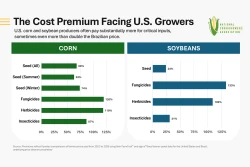
Analysis of 2023–2025 prices found U.S. growers paid more for nearly every seed and crop protection category examined.

Six technologies advance toward commercialization, with the first product expected in late 2026, despite criticism from environmental advocacy groups.

Heavy rains and hail have triggered widespread nutrient deficiencies, disease pressure and weed threats in parts of Illinois, Iowa and other states. Field Agronomist Ken Ferrie outlines some strategies for farmers looking to salvage their corn and soybeans.

After waiting months for much-needed moisture, heavy rainfall is turning early-summer fieldwork into a high-stakes scramble for some Midwest farmers.