
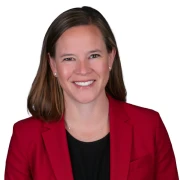

Teamwork and continuous improvement are the threads that weave together the Jack family and Silent Shade Planting Company. Playing to their strengths earned the Belzoni, Miss., farm, led by CEO Jeremy Jack, the distinction of 2023 Top Producer of the Year.
Rewriting Their Playbook
Mississippi wasn’t always the home turf for the Jacks. In 1979, motivated to find a way to grow their farm and build a future, Willard and Laura Lee Jack pulled up their roots from Ontario, Canada, to immigrate to the U.S. and start farming in Humphreys County, Miss.
“My family’s farm in Canada focused on vegetable production and 1,500 head of cattle. The area around the farm had become increasingly urbanized, which limited potential for growth,” Willard says.
However, challenges dogpiled on the farm; a steep learning curve of farming different crops in a new environment combined with the 1980s farm crisis led to financial difficulties.
“I will never forget going to my banker in 1984. The farm’s net worth was -$285,000,” Willard says. “I was determined to succeed. Failure was not an option. Thankfully, he believed me and gave the chance to turn things around.”
Survive And Then Thrive
“Change is part of our family culture; my parents moved 1,000 miles with three young kids,” Jeremy says. “Today our change focuses on process improvement and efficiencies.”
The initial 1,000 acres became 3,000 acres by 2001, and it now spans 11,500 acres in the Mississippi Delta. The family farms cotton, corn, soybeans and rice. In addition to Willard, Laura Lee and Jeremy, the family business leaders include Jeremy’s wife, Elizabeth, who is the head of human resources, public relations, safety and compliance, and his sister, Stacie Koger, who is a CPA and serves as CFO.
Farm growth was necessary as more family joined the business.
“When my father was diagnosed with thyroid cancer, it created a sense of urgency to pass on the day-to-day management of the farm to the next generation,” Jeremy says. “I joined the farm in 2007, and my sister joined shortly after in 2009. It became evident that we needed to generate more income to support more family members in the business. So, we began to make intentional steps to grow the family business.”
One such step was to be a grower that landowners want to have farming their land.
“We talk to our landlords about our production and conservation practices,” Jeremy says. “We also send them a quarterly newsletter with a variety of articles such as our crop progress, opportunities or threats on the horizon, or new practices that we are trying. For each of our landowners, we are proactive to improve their ground by taking soil samples for fertility, grading fields or moving wells from diesel to electric, for example. We treat their farm as if it were our own.”
The family also owns and manages Willard Jack Trucking, an eight-truck hauling fleet, and has partial ownership of a cotton gin and an aerial application business.
Watch The Game Film
To make the growth profitable and sustainable, Silent Shade’s way of doing business changed from day-to-day operations to overall strategy. Assessing productivity and the return on investment became paramount. The team credits technology as a key efficiency enhancer.
“Larger, smarter equipment has allowed us to use our people more efficiently,” Jeremy says. “For example, when we used six-row basket cotton pickers, it was a big day to finish 75 acres with five to six field crew members. Today, one operator with a module building picker can complete 100 acres of cotton a day.”
From his desk, the iPad in his truck or his phone, Jeremy can monitor equipment remotely via John Deere Operations Center. During the busy seasons, Jeremy jokingly relates his job to that of an air traffic controller.
As Operations Center sends him real-time data throughout harvest, Jeremy can monitor harvester speed, crop yield and moisture, and then make quick decisions on how many trucks are needed, where to ship the crop, and which field to start next.
Crop inventory and costs are monitored and evaluated via their farm management software, Traction.
Jeremy’s sister, Stacie Koger, uses the program to get real-time information on the farm’s grain inventory so she can make the right marketing decisions based on timely data. Together, Jeremy and Stacie evaluate input costs on a field-by-field basis.
“For us, controlling costs is just as important as crop quality and yield,” Stacie says.
The team focuses on problem-solving in the winter by reviewing their data.
“It’s important to know sometimes success is lucky: favorable weather patterns, low input costs or high commodity prices. Those are things outside of our control,” Jeremy says. “However, the hard times are where the real lessons are learned. I am a better leader and our team makes better decisions from times of low prices, high costs, floods, droughts, you name it — as they say, steel is forged under fire.”
Deepen The Bench
Five mid-level managers handle the business divisions. One focuses on trucking and four focus on the farm: grain bins and warehouse; irrigation, rice planting, tillage; shop, planting, harvest; and application, spraying and spreading.
“At the end of February, we have to have everything ready: the fields, equipment, seed and inputs. By the time we go to the field, we are just executing. It goes back to my football days. You practice. You prepare.
And then you just execute,” Jeremy explains, referring to his time playing college football at Mississippi State.
In every season and farm task, Silent Shade wants to be prepared to do the work and make improvements along the way.
“Our off-season is a great time for us to focus on employee training. We want to grow our people and continue to bring in top talent,” Elizabeth says. “We’re trying to change the culture of going to work for the farm. Change it to be the first choice. Make it more of a career path.”
She is proud of the team’s accomplishments. It’s a goal to have Silent Shade as an ag employer of choice within their area.
Listen To Your Coaches
Each of the Jack farm leaders are engaged in peer groups. It’s credited for many of the ideas they’ve been able to bring back to their operation and make improvements.
“It’s just part of our family culture to be a continual student — never stop learning,” Jeremy says. “I love agriculture; it’s what makes me tick. And visiting other farms, learning from other farmers, has given me so much opportunity for continual growth as a leader and producer.”
Stacie echoed Jeremy’s thoughts on the power of peer groups.
“Our peer group has been a solid sounding board for us,” she says. “We meet two times per year and share it all — full disclosure. Some of the best decisions we have made on our farm began with a peer group discussion.”
Jeremy also says Danny Klinefelter, who founded The Executive Program for Agriculture Producers (TEPAP) and passed away earlier this year, was a huge influence on their farm.
How They Keep Score
Rather than a single scoreboard, Jeremy says the team is targeting a multifaceted victory: lowering cost per unit, increasing quality of product, reducing safety incidents and improving team morale.
“There’s not one check box that defines our success,” Jeremy says. “It’s multiple things that add up. Sure, there’s if we made money or lost money, but it’s also how many ‘penalties’ did you have? Did we exhibit good sportsmanship? Did any of our team burn out?”
The experiences of every season — the good and the bad — inform the future at Silent Shade.
“Learning experiences make you who you are today. Taking opportunities as they come add to what you’re able to accomplish,” Jeremy says. “We have unlimited potential — we are not stopping, and we are not done.”



