

A burst of early soybean planting across parts of the Corn Belt last week has some farmers feeling ahead of schedule, while others are already bracing for replant decisions and dealing with seed challenges.
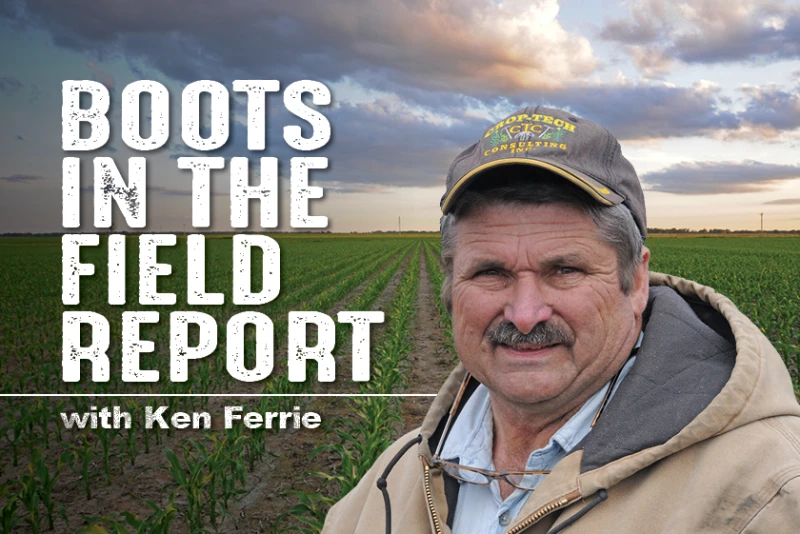
Farm Journal Field Agronomist Ken Ferrie reports in central Illinois, the convergence of record early planting, heavy spring rains, and uneven seed quality is testing stand establishment. Farmers are now facing tough choices regarding which fields — and which seed lots — will make the cut.
“The past 10 days, a lot of soybeans went in the ground,” Ferrie says. “I believe this may be the most beans ever planted in March for our customer base. We planted some here at the Crop-Tech campus, and they went in very well.”
However, that promising start was quickly met with adverse weather.
Ponding, Cool Soils, And Replant Calls
In parts of Illinois, recent storms dumped 3" to 3.5" of rain in a single night, leading to widespread ponding. While many of those areas drained within 24 hours, the status of those early-planted soybeans remains uncertain.
“Only time will tell, but because soil temperatures remain cool, I expect most of the beans will survive,” Ferrie contends. “If it were saturated and hot, they would die off quickly. But in cool conditions, you’d be surprised how long they can last.”
Ferrie urges growers to stay disciplined: scout fields, evaluate stands, and avoid guessing.
“If you’re scouting ponded areas and find soft, discolored seed, we’ll obviously need to replant. The quicker we get them back in the ground, the better the yield potential. We still have time to replant and maintain an early bean advantage,” he notes.
Crusting: The Hidden Threat
While ponding areas are highly visible, Ferrie warns that soil crusting on conventionally tilled fields may pose a greater threat to late-March soybeans.
“The bigger job is monitoring conventional-till soybeans for crusting. Heavy rain can create a seal that slows or stops emergence,” he explains. While no-till soybeans typically face fewer issues, they are not immune to crusting challenges and still require monitoring.
Ferrie believes many growers underestimate the importance of timely intervention.
“We may need to help these March beans out of the ground. Get the rotary hoe ready,” he advises. “The time to break a crust is when it’s light and the bean is not yet pushing hard against it.”
Waiting too long can turn a simple pass into a stand-loss event. “If the crust hardens and the bean hypocotyls become swollen trying to push through, your chances of success drop significantly. The trick is to go early. If you wait until the beans are clearly in trouble, the rotary hoe won’t be able to save them,” Ferrie says.
Seed Quality Under the Microscope
Weather isn’t the only risk factor this spring; seed quality is also under scrutiny. Seed labs are reporting a wide range of saturated cold test results.
“Samples are coming back all over the board,” Ferrie reports. “We’ve seen saturated cold scores ranging from 95% down to 9%. I suspect the samples falling below 40% may be carryover seed from previous seasons.”
The low cold score numbers are causing ripples in the supply chain, with seed companies pulling questionable lots from the system. This has led to canceled orders or last-minute substitutions for may growers.
“While it’s frustrating to not get the exact genetics you ordered, this is good seed stewardship,” Ferrie says. “Your supplier is doing the right thing by pulling that seed before it becomes a stand disaster in your field.”
Ferrie attributes these quality issues to last season’s production challenges, including heavy disease pressure and late-season drought.
Action Plan For Next Steps
Ferrie outlines several practical steps to help farmers manage the current volatility with seed quality and planting:
- Scout Aggressively: Dig for seed in ponded spots for evaluation. If the seed is mushy or discolored, make the replant call early.
- Ready the Rotary Hoe: Be prepared to move as soon as a crust begins to form. Ferrie refers to this as “Hoe before you know.”
- Monitor Seed Tests: Work closely with your dealer to ensure you are planting high-quality lots.
- Be Flexible with Genetics: A sound, high-quality substitute is better than a preferred variety with poor vigor.
- Use Rain Delays Wisely: Focus on equipment maintenance and planter calibration so you are ready to roll when conditions improve.
Hear more of Ken Ferrie’s agronomic insights in this week’s Boots In The Field podcast:



