
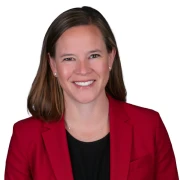

BNSF Railway wants agriculture to know one thing about the proposed Union Pacific-Norfolk Southern merger: It sees a threat to the supply chain.
“If you consolidate this much market share in one railroad in an already highly concentrated industry, good things aren’t going to happen for the agricultural community,” says Zak Andersen, chief of staff at BNSF. He sat down with Farm Journal this week to explain why the nation’s other largest western railroad is speaking out as the Surface Transportation Board (STB) review picks up speed.
Captive shippers face the biggest change
Andersen says shippers that have only one railroad today would feel it first. “If you’re captive today and you’re on either UP or NS, prepare to be even more captive,” he says.
He points to the merger application, which he says lists around 10,000 captive facilities if the deal goes through. He says Union Pacific has a history of pricing power in captive areas, including the Gulf and some farm states, and that the merger would take that model east.
Andersen says shippers in the West that rely only on UP can still choose between Norfolk Southern and CSX once cargo heads east.
“If this merger goes through, then the choice is gone,” he says. “You’re essentially taking four transcontinental networks and creating two.”
BNSF is not looking to answer with a merger of its own, he says. BNSF is owned by Berkshire Hathaway, and he says its owner has said publicly it has no interest in acquiring another railroad.
“The answer to the competitive problems isn’t reducing railroads even further,” he says.
“Doesn’t pass the straight face test”
The STB’s merger rules hinge on whether a deal enhances competition and serves the public interest. Union Pacific and Norfolk Southern argue that rail now competes with trucking, so the comparison goes beyond rail versus rail. UP has also said the merger would create the first single-line coast-to-coast railroad and move an estimated 2.1 million truckloads a year off highways.
Andersen rejects the trucking argument. “It doesn’t pass the straight face test,” he says.
He traces the rule to the late 1990s, when consolidation created both BNSF and the modern Union Pacific. He says the UP-Southern Pacific merger didn’t go well and caused a service meltdown that cost customers about $100 million a week. The STB responded by pausing mergers and rewriting its rules, shifting the standard from preserving competition to enhancing it.
“To think that 25 years ago the STB wrote a new rule to protect future truck shippers? That doesn’t make any sense to us,” he says. “It was always about rail-to-rail competition.” He adds that USDA was one of the primary filers pushing for the enhanced competition standard.
Andersen says several state attorneys general have also argued the deal fails the public interest test.
Gateways and bottlenecks
Andersen says the merger would also shrink the options grain has at the gateways where western and eastern railroads hand off cargo, such as St. Louis and Kansas City. Today, grain BNSF hauls to those gateways can interchange with NS or CSX.
“It does go away in a merged world,” he says.
He points to the 2023 Canadian Pacific-Kansas City Southern merger as a warning. He says the applicants promised to keep gateways open, as UP does now, and that UP argued against the idea that they would close. Then, he says, rail into Mexico over the Laredo gateway fell from 10,000 units a month to zero.
“Technically, it was open. But is it economically open? Probably not,” he says.
He says gateway protections would need to apply everywhere western railroads hand off to eastern ones, not only Kansas City, and would need rates set so a gateway can’t be closed economically.
A bigger risk, he says, is an integration problem.
“If something happens and the merger doesn’t go as swimmingly as planned, there’s some sort of integration challenge, which there always is, that could create big bottlenecks. That’s where you’re going to start to see problems in the supply chain,” Anderson explains.
Grain is still moving as harvest ramps up
On the ground, Andersen says BNSF’s grain business is strong. China’s restrictions on soybean buying hit, he says, but other buyers have kept grain moving: BNSF has had record Pacific Northwest grain export flows in about eight of the past nine months. Domestic demand is also pulling grain, including a lot of corn headed to West Texas cattle markets, and renewable diesel has been growing on BNSF’s network over the past couple of years.
He says BNSF’s strength is moving grain from Minnesota, the Dakotas and Montana to the Northwest for export, to the domestically to Texas to feedlots.
BNSF spends $3 billion to $4 billion a year on its network, Andersen says, much of it maintenance. He cites added siding capacity in the Northwest and Plains states so faster grain trains can pass slower coal trains, and a new Memphis project that adds track near BNSF’s intermodal facility to switch cars faster. He says BNSF conceived the Memphis project in spring after this year’s volumes materialized, and put it into service a couple of weeks ago.
For shuttle trains to the Northwest, he says, the key measure is turns per month.
“Three would be record-breaking,” he says.
BNSF hit 2.7 last week. Rain slowed harvest, he says, so volumes are only now “spinning up.”
Fertilizer and pricing power
Fertilizer would face the same dynamic.
“If you’re trying to move to an area where you have two railroads today and you have competition, that goes away the minute this merger goes through,” he says.
He says pricing power tends to follow market share.
“If one company has 50% of an industry’s business, pricing power follows that pretty soon after,” he says. “The consumer of the fertilizer initially is who will bear that price increase.”
Andersen did not have an estimate of how much rates could rise, and says several groups are working on that math, which he expects to see in filings due Nov. 18. He says UP already has the highest rates in the industry. UP’s revenue per unit is 37% higher than the Class I average.
Revenue per unit, or RPU, is the revenue a railroad earns per car or unit it moves. UP’s RPU rose 17% from 2014 to 2024, even as its volume declined 15%. Andersen points to that as the pricing power he expects the merger to extend.
What to watch next
Nov. 18 is the date Andersen is watching. That’s when comments, protests and responsive applications are due at the STB, and, he says, “everyone lays their cards on the table": the railroads, National Grain and Feed Association, Farm Bureau and individual customers. Filers may argue the deal is good or bad, and may ask for conditions such as access to other locations.
Andersen says BNSF’s position is that nothing can fix the competitive harm, but he expects a long list of requests. One that touches agriculture directly is a gateway protection. It would set a rate schedule for moving through gateways so they couldn’t be closed economically.
A parallel environmental review is also running, he says. Communities are raising concerns about more trains if UP and NS funnel traffic through a single gateway rather than several. The STB has said it will hold 12 field hearings but hasn’t announced where. Andersen expects them over the winter and spring.
After that come responses and rebuttals on a schedule the STB has already set, with final briefs due May 28, 2027, and no hearing date announced. Andersen expects the process to run “another year or so, maybe slightly less.”
Union Pacific has argued the merger would open about 88,000 new shipping pairs, and has said competing carriers have financial reasons to oppose a new transcontinental rival. BNSF belongs to the Stop the Rail Merger Coalition’s opposition, alongside CPKC.



