
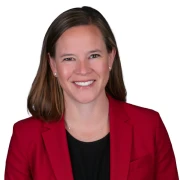

The co-founders of Agris Academy have one question: What’s your position?
After two years of consulting with farms ranging in size from 200 acres to more than 10,000 acres, Jeff Kazin and Mike Rohlfsen say they very rarely encounter a farmer with a precise answer.
“Not knowing your position in our former life was a terminatable offense,” says Rohlfsen, who worked in commercial global grain trading along with Kazin. “The goal is to know your position and have a very valuable tool that gives a snapshot to see it in one space and in its entirety.”
Hear more in the Top Producer Podcast:
Their education platform is Agris Academy, which focuses on merchandising and risk management. They aim to give farmers knowledge with the mindset of a merchandiser.
“We teach. We don’t advise. We don’t carry a series 3, and that’s intentional,” Kazin says. “We teach merchandising skills, so we teach farms to have the same mentality and the same technical skills that a grain elevator would. From our career, we’ve seen that is where we see the most money to save–all that money slips away either to the market or to the commercial buyer.”
The business offers customers two options: a retainer which provides for three on-farm visits a year plus on-demand availability; or a 10-week program virtual education program.
Boiled down, its’ about having an aggregated view and understanding of:
- Inventory
- Futures
- Basis
- Options
- Novel market-based approaches to stressing price risk on your remaining position
“We were head traders, in tracking trades we know where your money is being made and lost,” Kazin says. “There’s no reason in today’s farm and the complexity of running a farm–if you can do that, you can learn best practices in risk management and the technical skills in merchandising.”
To establish the farm’s position, they want farmers to know their cash, physical merchandise, and if a hedgable commodity, there’s a futures or options piece, and your basis position. Kazin says there are best practices that anyone can learn and have repeatable success in using.
They outline key questions and the skills to respond to them:
- when you hold grain
- when you don’t hold grain
- how you look at interest
- how you look at quality of an investment
- what to know about your cash holdings
“And then on the futures side, we teach farmers about the tools in the box, and what they really do for risk management for the farm,” Kazin says.
He adds, “These are repeatable skills that are applicable in a bullish market as they are in bearish markets.”
Archive of Top Producer Podcast Episodes
The co-founders say while many farms have pieces or parts of these business intelligence, very few have it as complete and in one place as needed.
“You can’t be a good risk manager if you don’t know your position,” Rohlfsen says. “And maybe you weren’t as far off as you thought you were; or maybe you’re nervous at night about what you’re long. On the flip side, if you aren’t nervous about it, maybe you need to be, and that’s telling you need to sell some.”
In addition to the financial benefits, the co-founders reference how with a number of their clients, their growth in knowledge and adopting a merchandisers mindset has boost their confidence in business management and their marketing.



