
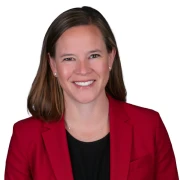

There are 1,500 miles between Brooklyn, N.Y., and Oakwood, Texas, but for Kimberly Ratcliff, where she grew up and where she’s building her business are connected by community, family and giving of oneself. Today, she works as ranch manager at Caney Creek Ranch and CEO of Ratcliff Premium Meats.
“I’m a businesswoman trying to keep agriculture alive,” she says.
As a shining example of an advocate and agricultural innovator, Ratcliff was named the 2025 Top Producer Women in Ag Award, sponsored by NewLeaf Symbiotics.
“Day to day, I work on the ranch, raising the cattle or expanding the profit lines on the ranch,” she says.
The 2,500 acre ranch was first started with a smaller acreage purchase by her father, Wesley, in 1973 that expanded in 2002.
Business Builder
Five years later, Ratcliff left her career in New York City to join the ranch and work with her father and build their business bigger. Her brainchild, Ratcliff Premium Meats was born.
“My biggest role today is to make Ratcliff Premium Meats flourish, and I want to be more than a meat company,” she says.
Her goal was a social impact company; Ratcliff had the vision for the meat business to bring economic stability and growth while connecting consumers to their meat supply. The bridge she is engineering builds concrete connections with customers, educates them on what it takes to produce nutritious beef while simultaneously creating economic value for the community.
“One of the ways I can help my community grow and sustain their businesses is by buying their animals and selling them through Ratcliff Premium Meats,” she explains. “It’s about telling the true meaning behind where meat comes from and telling the story of the people in the community. I’m not all natural; I’m not organic; I’m not grass fed. I have the economic value of the producers in my community. I want my meat company to be known for that.”
On the supply side, she’s built a network of about 30 cattle producers, of which about 80% are Black or minorities. She monitors incoming orders, surveys producers for animal condition and coordinates with the slaughterhouse schedule.

She’s gone to work to build out markets for the meat, quickly growing beyond farmers markets. Today, the business accepts online orders, has a growing distribution direct to restaurants, contracts with school districts and regularly supplies the local food banks. Ratcliff is now a vendor for Buckhead Meats as well, and in 2025, Ratcliff Premium Meats brought 20,000 lb. of its beef into Texas.
“Ground beef production makes efficient use of cattle selected specifically for grinding, ensuring consistency and quality,” Ratcliff explains. “It’s one of the most stable and dependable categories to source. If I process 20 head one week, I can take a certain volume of the ground beef into the schools, and then have the availability for the other cuts on the website.”
Admittedly, her biggest challenges have been on the distribution side of the business.
She’s successfully forged relationships with the school districts serving Austin and Houston, which includes not just hamburger patties but also giving students presentations on beef production and ranch management.
“That’s the kind of connection I want,” Ratcliff says.
Working with the Feeding Texas’ Local Food Purchasing Assistance program, she’s supplying 8,000 lb. of ground beef about every other week to the Houston Food Bank.
Ratcliff has also dedicated time to doing pop-ups and restaurant events in metro areas including Harlem, Baltimore and Atlanta.
“I’m not concerned about being in grocery stores, and I’m not concerned about being global,” she says. “But if I am in grocery stores and I am global, I want you to know I’m impacting this community. That’s more important to me than worrying about being on the grocery store shelf.”
At this time and juncture in the business, she says she’s not quite the scale that larger distributors seek out, but she’ll continue to be proactive with brand awareness, building relationships and in carving out a spot for her product in the market.
“Our story is about how a business can survive in a community that has a population of 700 people, how it’s thriving and how it’s feeding the world,” she says. “In 10 years, I do believe we will be this company people will look at of saying how rural America looks.”

Finding Her Way
Ratcliff’s journey took a bit of a U-turn in 2007. After seven years at Bloomberg in New York City working in the company’s public relations division, her heart and imagination called her to Texas.
“I saw a need to bridge the gap from the source of our food to the consumer,” she says. “I couldn’t build that bridge in New York, but I could from the ranch.”
Ratcliff says she was welcomed home, but her approach to bringing change to her father wasn’t always received well.
“It took me six months to realize I was doing it wrong,” she says. “I was pushing so hard against the ways he’s done things, but I wouldn’t have the opportunity to build something without what he did and the way he does it. I was bringing change the wrong way.”
Instead, she took a new approach.
“I asked dad to give me a piece of something — let me show him myself. What I’ve learned is the next generation will have to do a lot of show and tell,” she says. “My dad said, ‘As long as you can show me it’ll work, I’ll be your biggest fan.’”
Now more than 15 years later, Ratcliff not only has her father’s full support, but she has also brought in both her brothers part time.

“I’m all about this being a family affair. If we didn’t have family involved in what I do every day, it wouldn’t feel purposeful. That’s something, dad always made me involved in his business every day — no matter what it was. Then your life is personal, and you know you have a purpose.”
Ratcliff acknowledges her mother’s influence and lasting impact on her since her passing in 2019.
“Really from mom I got my outgoingness, socialization, strength and frugalness,” Ratcliff says.
Ratcliff explains while she first saw the opportunity being a non-for-profit, she’s incredibly proud of what she’s built with the business and the social impact it has had.
“What began as a personal venture has grown through shared experience, beyond its original scope,” she says. “Over time, the business has become something built on experience and collaboration, supporting the people and families in this community.”
What It Means To Advocate
Representation and reputation are the foundation of Ratcliff Premium Meats. CEO Kimberly Ratcliff says it’s the story behind her product that has led to its success.
“Agriculture is often undervalued, especially the unique challenges of small family farms and minority farmers,” she says. “This is particularly true for underrepresented communities like Black farmers and ranchers.”
That is what has led her to serve in roles on USDA advisory councils, steering committees with Texas A&M AgriLife, Capital Farm Credit advisory committee, the Independent Cattlemen Association officer role as the treasurer, and more.
“Advocacy is essential because it directly impacts the livelihoods of families, the food system and sustainability of communities,” she says.
This fall, her perspective and voice were shared in a documentary film produced by Jordan Peele’s Monkeypaw Productions. She is featured in, “High Horse: The Black Cowboy,” which is currently available on Peacock.
“The producers found me and my story on social media,” she says. “It was important to me to share what I’m building, and the story is deep and rich. I understand the history, and I’m coming home — I want to be the uplifting part of the story.”

Marketing Maven
With her education and professional background in marketing, Ratcliff brought a distinct set of instincts and skills to her entrepreneurism. Her vision was to build an inter-related, community-built business as being stronger than stand alone or isolate entities.
“In the ag community, I need your cattle,” she says. “I need you to keep your land. I need you to have healthy cattle, I need you to have great grass, great soil, I need you to have all those things that will make me successful. So how can I help you with your success so as the end result we can produce great meat?”
Ratcliff sees her role as the storyteller, and she knows she has a unique story to tell. When she first arrived at the ranch, she says neighbors would stop by just to see that in fact she had ‘come home.’ She turned that curiosity into a way to engage the community.
“We threw a lot of parties on the ranch to bring people together, and then we’d do small projects like catch calves, fix fence, fix waterers,” she says.
Ratcliff says how to network was ingrained in her early on.
“My parents never hid what it takes to be a successful business owner,” she says. “And it was about being fair to your employees, investing in your community and giving back.”
To strengthen her knowledge of the industry, Ratcliff enrolled at Texas Christian University’s ranch management program and became its first Black graduate.
“I wasn’t raised here; I don’t know it all,” she says “I’m a bridge builder. I thought of a great idea in running a business, and I have an ability to bring people together.”
And she has found leaning on others’ strengths while letting go of some previous responsibilities has been a balancing act in her leadership.
Roles she’s released includes fulfillment, HR, and even her legacy strength: marketing.
“I hired a marketing firm, and every Tuesday morning do meetings,” she says. “Anyone from my team can be on the call, ranch hands, anyone. That’s my opportunity to connect everyone because they can ultimately help with marketing.”
Ratcliff has also built her social media presence to share the story of beef, its nutrition and preparation ideas. Once a quarter, marketing contractors visit the ranch to film social media content.
“I’d never been on TikTok, but my marketing partners convinced me to try it,” she says. “Our video about the Women in Ag award got more than 100,000 views, 1,000 comments and we got 30 orders for meat.”

Authentic Self
Ratcliff describes herself as a woman trying to change the way farming looks.
“All I can do is be my authenticate self,” Ratcliff explains. “There’s an importance of putting a woman like me in front of the story of these producers.”
She adds: “Agriculture is going to look different, and we need to accept the changes. Just like life evolves, agriculture will evolve.”
Join a network of leading edge farmers and producers at Top Producer Summit, Feb. 9-11 in Nashville. To kickoff the conference, the 2026 award finalists and winners will be honored. Click here to view the agenda and register.



