
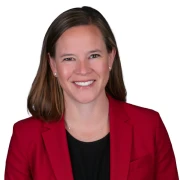

In November 2026, there are two previous Top Producer awardees on ballots in different parts of the country to serve for statewide political representation.
- Top Producer of the Year finalist in 2018, Darren Bailey, of Bailey Family Farm, is running for Illinois governor
- 2024 Next Gen Award winner, Hallie Shoffner is running for U.S Senate in Arkansas
For both, running for office is an extension of the “sweat and service” they were taught on the farm. Both candidates are motivated by a fear that the “next generation” is being pushed away from farming while there’s simultaneously a growing lapse in representation from rural America.
Catching Up With The Candidates
When Bailey Family Farm, located in Clay County Illinois, was named a TPOY finalist, the business was farming 12,000 acres and managing trucking and excavating businesses. Bailey says in 2017, he was actively transferring farm management to two of his sons, Cole and Zach, and it was also the first year he was elected to serve as a state representative in Illinois. He went on to serve as a state senator, and had a campaign for governor in 2022.
Its farming footprint is similar today. One recent addition to the business portfolio was a large storage facility for paper goods and wood, which was managed by Zach. After Zach’s death in an aviation accident in October 2025, Bailey sold the business.
Read more about Bailey Family Farm here.
Hallie Shoffner, who farmed near Newport Ark., made the hard decision to exit farming in 2025.
“I knew that the farm would not go another year on February 10, 2025. I was looking at six different spreadsheets, and I thought to myself ‘we can’t put a seed in the ground knowing that we’ll lose money on everything we were growing,’” Shoffner says.
The next day, she called the auction company.
“I didn’t know who I was if I wasn’t a farmer. Even on the campaign trail, I still say, I’m a sixth generation farmer. Because I don’t know what else to say. I grew up farming and returned in 2016. I really do still hope that farming is in my future.”
Read more about Hallie Shoffner here.
Vision For the Future
They both believe that the resilience, multitasking, and problem-solving required on the farm serve them well in politics as well.
Bailey emphasizes that farmers deal with “uncontrollable situations” daily. On a farm, if something doesn’t work, you cut it; if it works, you add to it. He views the state budget and regulations as a piece of broken machinery that requires a farmer’s “roll up the sleeves” mentality to repair rather than gross mismanagement.
“On the farm we have equipment failures, equipment breakdowns, weather sets in, you have uncontrollable situations, and what do we do? We have to roll up the sleeve, and as soon as we can we get to work or we have to start all over again,” he says.
Bailey’s perspective is one of preventative stewardship. For Bailey, the state of Illinois is facing a succession crisis. He mentions that families and children are leaving the state for better opportunities elsewhere. He famously chose to spend money intended for a home expansion to accommodate larger holiday gatherings on his first governor’s campaign instead.
“There was no reason to build a bigger living room if the grandkids all lived in different states and we were traveling there for Christmas?” he says.
Shoffner believes the Senate needs the “integrity and care” of someone who knows how to get their hands dirty and can represent the largest industry in Arkansas saying one in six jobs in the state ties back to agriculture.
“Hard work and service is really at the heart of this campaign, because that’s what my parents taught me on the farm,” Shoffner says.
Bridging the Disconnect
Both candidates feel that rural America has been “overlooked” or “rigged” against, and they see themselves as the necessary bridge between the field and the capitols.
Shoffner focuses on the “empty chair"—the fact that no elected officials showed up to hear farmers in crisis in her state during farmer organized meetings. Her “why” is about providing a voice to the voiceless who are “grinding their teeth” at night.
“Rural America matters much more than people realize. Unless you have people from rural America representing these states in Congress, you’re not going to have anybody fighting for them,” Shoffner says. “The most important thing, that I have learned is that politics is more about listening, then it is talking. I think most of all, people just want to be heard.”
Both candidates believe the “long economic chain” of agriculture is invisible to current leaders, and only a farmer can effectively advocate for the rural hospitals, banks, and schools that rely on that chain.
Bailey views public service as “giving back” and using his own experience to help others.
“Growing up as a farmer, we’ve got a broad range of abilities, of experiences, of gifts, and I’m able to bring all of those to the table,” Bailey says. “So if I show up to the trucking company, and they’re telling me how they’re so fed up with too much regulation, you know what? I get that.”
Call To Serve
“Being involved in government, being involved in civic organizations, is of utmost importance to maintaining a constitutional republic, the greatest nation that the Earth has ever known–will ever know,” he says. “We have a responsibility to uphold that, and in order to uphold it, it is being involved giving up our time, giving up that one day a month, or whatever it is. Get involved and be the difference,” Bailey says.
He admits in the first half of his life, he wouldn’t have thought to step outside of his farming business and serve in a civic capacity. But he’s quick to say, he now firmly believes such a sacrifice is worth it.
Shoffner has learned through her own grieving process of closing down her family’s farm that public service can provide an outlet to share a vision—and perhaps prevent another farmer from having to make the same hard decision.
“I have this vision of being able to drive around and say, you know, that field that used to be just all soybeans or corn, and now look at it. It’s a whole mix of all sorts of different things that people eat, and we’re selling those back into the communities, and Arkansas is a place that not just feeds its own people, but, you know, exports food all over the world. That’s the vision that I have for when I am old, driving around in the truck with my son.”



