

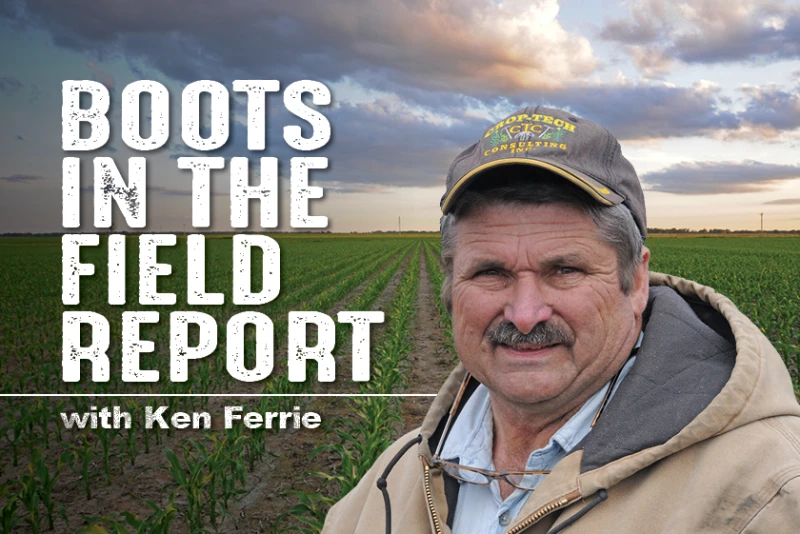
Farmers in central Illinois have a green light this week to plant corn. Ken Ferrie thinks the 2024 corn crop could be completely in the ground by end of week.
One concern is the quality of the seed corm farmers are planting, says Ferrie, Farm Journal Field Agronomist and owner of Crop-Tech Consulting, Heyworth, Ill.
Looking through the number of samples farmers have submitted for testing, he notes that 37% of the samples fall below what he would call good quality levels, and 11% fall into the poor category.
“I kind of wonder if last year’s drought had something to do with this year’s seed stock quality, but I’m not sure,” Ferrie says.
It’s been a wise decision, he adds, for many central Illinois farmers to hold off planting some of the questionable seed corn lots until now, with soil and air temperatures registering higher as May 1 nears.
Pull A Sample
One suggestion Ferrie has is to keep a small sample of seed – about 2 pounds from each lot – in a cool, dry place until the corn crop is emerged and stand counts can be made.
“If everything is OK, then we can discard it,” he says. “But if we have troubles with stand establishment, then we can send it off for testing to rule out seed quality issues.”
Ferrie adds that about 16% of the samples his team checked this spring has had severe pericarp damage. That signals there is a tear in the seed coat right at the embryo.
Pericarp damage is important if you apply liquid starter fertilizer in the furrow with the seed.
“A ‘severe’ damage rating means damage to the embryo axis (the indented part of the seed),” Ferrie says. “Seeds with tears in the axis are susceptible to salt burn from starter.”
Seed with a high pericarp-damage score can produce a good stand, as long as you manage the risk from in-furrow fertilizer. What that score is - or what you think it could be - can guide your decisions.
“If you’re putting fertilizer in-the-furrow and you haven’t run a test on your pericarp damage, you may want to save a sample for that as well,” Ferrie says. “Testing (after the fact) won’t fix the problem, but it might answer some questions when we’re out there evaluating fertilizer burn issues.”
Check out these other articles on seed quality and planting:
Ken Ferrie: Some Concerns from Sampled Corn Seed Quality
Test Your Seed Before Planting To Avoid Quality Issues
How to Calculate Growing Degree Days (Simple Formula)
Ken Ferrie: 7 Tips To Overcome Moisture Concerns At Corn Planting
Hear Ferrie’s complete comments at this week’s Boots In The Field podcast:



