

As the number of lawmakers with direct ties to production agriculture continues to shrink, who will step up to speak for rural America? Farm Journal is proud to present Ag Vote 2026: Who Speaks for America’s Farmers?, delivering in-depth reporting from now through Election Day. Tune in for LIVE election night coverage Tuesday, Nov. 3 at 7 p.m. Central on Farm Journal TV, Farm Journal Now, AgWeb.com and YouTube.
Arkansas is the nation’s top rice-producing state, and it led the country in Chapter 12 family-farm bankruptcy filings in the 12 months ending June 30. USDA data project U.S. farm debt at about $625 billion this year, roughly 18% above 2019 levels.
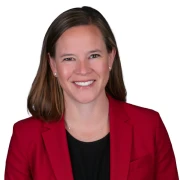
The state’s 2026 senate seat race features Sen. Tom Cotton, the Republican incumbent, and Hallie Shoffner, the Democratic nominee and a farmer who closed her family operation last year.
Nonpartisan raters call the race safely Republican, but Shoffner argues farm stress could loosen the GOP’s hold on rural voters.
What each candidate says
Hallie Shoffner (D)
Shoffner, 39, is a sixth-generation farmer who ran her family’s roughly 2,000-acre seed and row-crop operation near Newport, Ark., and won the 2024 Top Producer Next Gen Award. She closed the operation in 2025 after rising costs left the farm carrying an operating loan secured by her parents’ land and savings. She holds a degree from Vanderbilt and a Master of Public Service from the Clinton School, and serves on the Arkansas Foodbank board.
She is running for U.S. Senate in Arkansas on a specific claim about farm policy: producers don’t need another round of annual aid, they need the federal government to carry the early risk of building new markets.
“Farmers don’t want bailouts every single year,” Shoffner says. “We want markets. We want new ones. We want domestic ones. We want local processing.”
Shoffner’s pitch to farmers is built on her own balance sheet. “I did have to close my family’s farm last year because of the farm crisis,” she says. She puts the state’s losses at 25% of family farming operations so far, and says credit agencies now tell Arkansas farmers that over half of the farms in business will not be able to pay back their loans. “We lead the nation in farm bankruptcies and farmer suicides,” she says.
She also points to Washington. “We haven’t had a farm bill. Not a real one, not in three years,” Shoffner says. She says her opponent, Sen. Tom Cotton, “voted against the Farm Bill. Twice.”
Arkansas is the top rice-producing state, and Shoffner uses it to show what the crisis looks like in acres. “We planted about 800,000 acres this past year, instead of the 1.4 million we usually plant,” she says. “And I wish I could say that things are better, they’re really not.”
She lists the pressures as a mix: “a chaotic tariff policy,” high diesel costs “because of the war in Iran,” and a quality problem. “Our weather has not cooperated with us. Our genetics are not as good as they used to be. So we’re seeing a lot of rice breaking apart in the mill.”
Her rice plan has three parts: a payment that “makes sense in terms of the threshold of the market price,” crop risk tools, and new domestic demand. On the last, she says “we import 40% of the rice that we grow in Arkansas. But we eat plenty of rice here. Why is it that we can’t grow a high-quality American rice that’s high value that consumers are excited about eating?”
Shoffner wants Arkansas growers to add specialty rice, such as jasmine and basmati, alongside long-grain commodity production. She also names sweet potatoes and watermelons, and crops growers have grown in the past. She says farmers are willing. “Our farmers are open to growing things that make them money,” she says. “The issue is that our farmers can’t take the risk to buy new equipment, or to build an on-farm processing facility.”
Her answer is for the federal government to “leverage its size to de-risk that market building.” She names two tools:
- Guaranteed first-contract terms. “Guaranteeing contracts, new ones, between buyers and farmers, especially for the first 3 years.”
- Low-interest guaranteed loans for processing facilities, covering “washing, sorting, flash freezing, pulverizing, packaging, cold storage, specialty transportation.”
She adds a demand side. A farm bill, she says, should “leverage the SNAP program to be able to buy those agricultural products from our farmers, making sure that farming and nutrition works together again.” And she wants to open the school market: “the largest restaurant in the United States” is “our public school cafeterias.”
That means “lowering the procurement barriers” for child nutrition directors, who “wear lots of different hats,” so schools can buy more easily “from farms right there in their communities.”
Asked for a favorite campaign story, Shoffner describes a friend who farms soybeans and corn in northeast Arkansas, near the Missouri border. He planted sweet corn one year for the community, hand-harvested by volunteers because he lacks the equipment. The Food Bank of Northeast Arkansas later sought a grant to scale it up.
Shoffner picked corn there herself.
On camera, she asked him whether he would do it at scale if it made money. “He said, ‘I’ll grow anything that makes me money, just as long as I can keep farming, because farming isn’t just a job, it’s a calling,’” she says.
On how she would deliver in a divided Senate, Shoffner says Washington isn’t working “because our politicians went to DC and stayed too long. They lost touch with the folks on the ground.” She says she would “work with John Boozman,” Arkansas’s other senator and chairman of the Senate Ag Committee, to pass a new farm bill. She adds that some new markets “don’t necessarily require legislation.”
Her last point is about visibility. Shoffner calls Arkansas “ground zero” for the farm crisis, but says other farm-dependent states are not speaking up. “I have actually never heard, not once heard anyone in D.C. call it a farm crisis,” she says. “You have to name the problem before you can solve it.”
She closes with the role she wants government to play. “Have the government push the boulder up the hill to get us to the top so that we can grow new things and have more markets,” she says, “and then the government can get out of the way. And let us roll it down the hill from there, and do what we do best.”
Sen. Tom Cotton (R)
Cotton, in Congress since 2013 after one House term, grew up on his family’s cattle farm in Yell County, Ark., according to his Senate office. He graduated from Harvard and Harvard Law, served nearly five years as an active-duty Army infantry officer, and worked for McKinsey before the Senate. His listed committee seats are Armed Services, Energy and Natural Resources, Intelligence (chairman) and the Joint Economic Committee; Agriculture is not among them.
The senator answered the same questions in writing. His account of the farm bill differs from Shoffner’s. “That’s why I voted for John Boozman’s farm bill last year, and look forward to supporting the rest of it this fall,” he writes.
He opens with the problem. “The last few years have been very difficult; I hear that across the state,” Cotton writes. “We need more favorable trade deals to improve export markets, more energy to bring down diesel prices, and an improved safety net.” His three stated priorities are “strengthening the farm safety net, lowering production costs, and addressing unfair foreign competition.”
Cotton says last year’s bill “increased reference prices, expanded crop-insurance support, made the small-business deduction permanent, and increased the estate-tax exemption.” In the meantime, he says, he supported the Farmer Bridge Assistance Program, “which provides temporary assistance while those improvements are implemented.”
“But that’s still not enough,” Cotton writes. He says he brings producer concerns “directly to the President,” including pushing him “to reverse his decision to increase foreign beef imports.” He says he also urged the administration “to provide temporary federal penalty relief for on-road use of red-dyed diesel, an idea Arkansas farmers asked me to pursue. The administration has since taken action on that issue, and I’m grateful for it.”
On what he would change, Cotton names input costs and foreign competition. “I’d like to see lower input costs,” he writes, citing inflation of 9.1 percent in June 2022. “It’s come down a long way since then, but a slower inflation rate does not mean prices have returned to their earlier levels. We need more energy production to help with that.” On trade: “American producers can outcompete everyone on a level playing field.”
Asked for a connection to agriculture, Cotton points to his family’s cattle farm.
“Agriculture isn’t just an industry in Arkansas, it’s a way of life that builds character,” he writes. “Working in agriculture teaches you how to solve problems on your own, the value of hard work, and resilience when times are tough.”
On divided government, Cotton blames the other party. “It can be difficult at times, especially now, when Democrats have blocked typically bipartisan legislation like John Boozman’s farm bill,” he writes. “I remain hopeful that Democrats will come back to the table and support the farm bill that our producers are calling for and desperately need.”
He also frames the race as a choice. “If Democrats return to power, energy costs will increase, inflation will rise—as it did under Joe Biden—taxes will go up, and Democrats will cut aid to farmers to put the fraud back into the food stamp program,” Cotton writes.



