
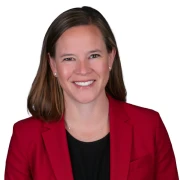

Ambassador Terry Branstad was the first U.S. state governor to host Xi Jinping in 1985, so he carries the unique distinction of being called an “old friend” by the Chinese leader as well as a friend to President Donald Trump.
He’s also the longest serving governor in U.S. history having had two periods as Iowa governor (1983 to 1999 and 2011 to 2015).
“I was the first American governor that hosted Xi Jinping when he was just a young party leader from our sister state, Hubei province in China,” Branstad says. “So I’m one of the few people in the world that can say I’m a friend of Donald Trump, and Xi Jinping calls me an old friend because we treated him so well when he came Iowa in 1985.”
As such, Branstad has the one-of-a-kind perspective on how trade will evolve in the coming years with the second term for President Trump. He shared more on The Scoop Podcast.
“Things are developing pretty fast, and the appointments are being made, but I think Trump has really learned from his first-term experience that ‘Never Trumpers’ are gone,” Branstad says. “He’s really looking for people that are loyal and competent, and I’m very hopeful that we’re going to see some dramatic changes that’s going to help make America great again and help improve income for American workers and income for American farmers.”
Branstad himself is proud to mention the background of being an Iowa farm kid.
“As is the case in agriculture, we have ups and downs. We’ve had some pretty good years, and now we have some challenging times,” he says.
Branstad highlights how “for a trade deal to be good, it needs to be a win-win for both sides.” He offers some trade “wins” with the Phase One agreement.
“We were able to, over several years, negotiate the Phase One trade agreement, which led to dramatic increases in exports, especially agriculture exports to China,” he says. “I’m hopeful that this time around, Trump will look at the same thing. And I think one of the things he’s trying to do is encouraging some of these foreign companies and foreign countries to look at investing and creating jobs in the United States.”
He shares more insights about the future of trade and its effects on the agricultural industry in this episode of The Scoop Podcast.
To hear even more, attend the ARA Conference and Expo, Dec. 3 to 5 in Houston where Branstad will be giving a fireside chat.



