
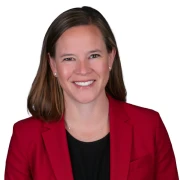

It takes new solutions to fix problems otherwise yet to be solved. And that’s what WinField United sees as the opportunity to use artificial intelligence to help with team member retention. Specifically, as explained by Leah Anderson President, WinField United and SVP, Land O’Lakes, Inc, one in four retail sales agronomists in their system (Winfield United and its retail owners) churns out of the system every year.
To support their retail agronomists with decision-making and product recommendations, WinField United partnered with Microsoft to take its 800-page Land O’Lakes Crop Protection guide and build a copilot called Oz (named for the abbreviation for Ounce).
When prompted, Oz delivers fast, mobile-friendly responses. It is currently in its pilot phase with expected availability across the entire WinField United network next year.
Anderson says the project has two goals:
- Support retail agronomists in their recommendations
- Support decisions with a focus on return on investment
“This is about helping our agronomists be as productive and effective as they can be with the time they have,” Anderson says.
She says the Crop Protection Guide has been a valuable resource and making it more accessible with the technology will bring more value from the data sourced from the company’s Innovation Center, Answer Plots and more.
“Especially in this moment when farmers are under so much financial stress, there isn’t an ability to waste a dime on a product spend that’s not going to yield an ROI,” she says. “It’s about how we get the information in the hands of retailers and agronomists and farmers faster, better, so that they have more confidence as they’re making those decisions on their farm and managing their crop every year.”
More AI To Be Embedded In the Business
Anderson says this is phase one for Oz and signs of more of what’s to come from how WinField United uses artificial intelligence. Regarding tools for agronomists, she sees adding predictive analytics, emerging pests and more products and technologies. She sees how AI will be applied on the business side of WinField United as a distributor with logistics and predictive tools for inventories.
“We’ll continue to work on the overall efficiency of how product is flowing and moving,” she says. “We’ll work on getting to a point where, you’re confident the right thing is in the right place at the right time for the right purpose, even before you get the call from the retailer saying they need it.”
And AI has the potential to help transform the logistics of the business to meet the current demand. Speaking to how U.S. farmers typically plant their acres of corn and soybeans in a three-week timespan, the supply chain is “overbuilt” for that small time window.
She continues, “in order to make sure that ultimately farmers have everything they need, all of us, whether it’s retailers or distributors or basic manufacturers, we’re all doing everything we can to build really big piles of stuff and get it out into the country to be ready for whatever it is that the grower’s going to need. My observation about that is that it’s pretty inefficient today. The reality is, there’s too many piles of stuff, and they’re too big. And a lot of times, the piles just get returned back at the end of the season.”
WinField United will experiment in how to use AI to drive more efficiency in their supply chain.
“It really bloats a lot of people’s balance sheets, working capital, with too much inventory. We’re paying too much to store stuff,” she says. “There’s lots of inefficiency that comes from not having a really good demand sensing capability and appropriately designed forecasts. Everybody does their best today. This isn’t being critical in any way, but you think about what AI can start doing for us to be better modeling demand and forecasting, so that we can be smarter about how big those piles of stuff really need to be, and where they need to be.”
She concludes saying AI isn’t about replacing people or talent but rather doing business differently with an aim of doing it better.
“This gives us an opportunity, to show people the power of AI being an and–not an or–not a replacement, but an enhancer,” she says. “And so there’s a piece of this too just getting comfortable with what AI can be and what it can do for all of our shared businesses.”



