
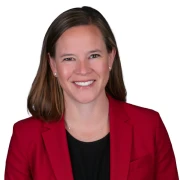

Take a peek behind the curtain, and Bestifor successfully straddles the legacy of its multigenerational farm business with the creativity of generating continuous improvements and launching multiple new businesses.
At the helm is Chase Larson, who became CEO in 2024. In all, there are six companies spanning: farming operations, commercial hay and forage, consulting and land management, pet food, welding and fabrication, trucking, and software. For his excellence in farm business management, Larson was named a finalist for the 2025 Top Producer of the Year Award, sponsored by BASF, Fendt and Rabo AgriFinance.

The Bestifor company is aptly named, using the Danish word for grandfather, and while it is rooted in agriculture, the farm yields more than just crops. It’s an idea factory. Since joining the farm full time in 2008 after college, Larson has launched three new businesses for greater diversification: Best West Fabrication, Grandpa’s Best and VandWater.
“The success of watching an idea come to fruition is a special feeling,” Larson says. “I’ve found one company leads to another. Folks may ask: ‘Why do you do so many things — why do you want to be so busy?’ It’s like anything else. Why do anything if you aren’t going to give it your all — my capacity, my willingness, how hard I work.”
He says diversification has been key to growing their business, exemplified by the three businesses he helped launch from scratch.
“You can’t stay in one lane the whole time,” he says. “I’m not afraid to fail.”
History of Resilience
Chase Larson is a sixth-generation Kansas farmer. The Bestifor Farm company traces its origin story to Ejner Larsen, Chase’s great-grandfather. After his death in a car accident in 1972, the farmland was sold on the courthouse steps. Larson’s father, Thayne, and uncle repurchased the land and restarted the farm as Bestifor.
However, the next decade proved challenging through the farm economic crisis in the 1980s. The farm pivoted from row crops to hay.
“Innovation through irrigation became a building block for growth and production, which allowed for expansion into value-added companies,” Larson says. “Over the years we increased the land base, built infrastructure for the hay business and invested in grain storage.”
Born from Necessity
Instead of pulling employees from daily work to do one-off repairs that would pop up, Best West provides a focused team of fabricators to serve Bestifor Farms and other surrounding farmers.
Best West Fabrication tapped the talents of local fabricators to form a new repair business for on-demand repairs.
“It’s a necessity we have to have to keep the farm running smoothly,” Larson says. “We went from one employee to now four. And they do everything from custom irrigation fittings to in-field repairs.”

Pet Project
Larson’s wife, Celine, was the driving force behind launching a pet food company, named Grandpa’s Best. From the product formulation, to the packaging, to the branding, the team brought the concept to life and entered a completely new market — a $3 billion pet food market — for Bestifor. The company tapped its talent at Best West to install manufacturing machinery for packing and packaging of the hay-based pet food.
“Today, we’re on Amazon, Chewy and direct ship from our website,” Larson says. “We’ve learned a lot in this business, and I decided to cut one of our biggest contracts. It was taking too much labor, and we weren’t making money. Sometimes, you have to shrink into profitability. But if you don’t give it up, you won’t find the next deal.”
Other challenges in developing the product came in product consistency, bale weights, dust control, product safety and throughput.
But perhaps the greatest challenge was the personal loss of Celine, who died in 2019 after a multiyear battle with cancer. In her memory, Grandpa’s Best and its 501(c)3 non-profit foundation Hop for Heroes, now run an annual program to give recognition and financial assistance to first responders and other worthy community projects.
“Celine played a behind-the-scenes role in everything with the farm,” Larson says. “She and I were a team, and she helped me be a better son, employer and father.”
Married for 11 years, Larson and Celine have four daughters: Tess, Wynn, Sadie and Fern.

High-Tech Stewardship
Farming a mix of irrigated and non-irrigated land across north central Kansas, water management is always top of mind. The idea for a software to better manage water use compliance came to Larson in 2018. In Kansas, he saw first hand how farmers and commercial cattle feeders were regulated in water management.
“I knew I had to figure out how to do it,” Larson says. “People were tired of making mistakes with water rights or quantity of water they had left.”
From that seedling of an idea grew VandWater, a software now used across eight states. Thousands of wells, and, through the supply chain, 1 million head of cattle are tied back through its tool.
“As an irrigator, people think you are using a lot of water, but it’s very little,” Larson says. “More information is better, and VandWater makes sharing the information easier. Everyone can see the pivot, if they are running, and how many times they go around. I’m taking a proactive approach of how much water I use. On our farm, I use it for transparency to all my landlords, all my employees.”
Larson says VandWater is designed so anyone with a smart phone can see the data. At the end of the year, or any reporting cycle, the data can be delivered immediately for compliance.
“We can’t afford to over pump or run without water,” he says.

Refined Management
The farm is run by a four-person board, which includes Larson, the farm’s accountant, CFO, and his father, Thayne, who is currently president. As CEO, Larson runs their monthly meetings where all financials for each division are reviewed, questions are asked and projects are considered.
He candidly shares he had to earn the job and believes if the board didn’t think he was the right person to be CEO, they’d have hired someone else, nodding to the family’s openness to bring in talent from outside of familial ties. That list includes the office manager, farm foreman, head of the fabrication company and members of the pet food company.
“I’m one of the fortunate people who always knew what they wanted to do,” Larson says. “Since grade school, I wanted to be a farmer.”
When he was working to launch the new companies, Larson gives a nod to all he learned from his father firsthand. At home, he credits his mother, Jeanne, for all her help with his four daughters.
“I picked up my father’s entrepreneurial spirit,” Larson explains. “I saw my dad grinding. Through college, I sharpened my negotiating skills by managing hay logistics, and I then realized I actually had a knack for it.”
Knowing the business from the inside, Larson has applied his passion for customer service. Whether it’s delivering feed to a feedlot or a software user accessing their data, Larson says an expectation of delivering what was promised when it was promised is similar across all of the businesses. Now with the role of CEO, Larson says there’s definitely less time in the cab of machinery, but he’s enjoyed stretching his skills.
“With the tech company, writing code was outside of my wheelhouse,” he says. “But we found partners we could trust and built something until it was a reliable, useful product.”
When it comes to managing his team, Larson says local labor has been the backbone of the farm’s work, but the tightness on availability isn’t adequate for what the farm needs.
“We couldn’t do what we do without the local labor we have, but it’s limited on the quanitity,” he says. “It’s a pain point for all businesses – we are no different.”
Bestifor has used the H-2A program since 2009, with at least five employees in the program originating from Mexico.
“If we could get H-2A to be a year-round program, that would help across the board,” he says. “We have to get these regulations off our back; the reporting has to get simpler.”
He says many of their H-2A workers have been consistent returners to Bestifor, with more than decade-long tenures on the team.
“We are a work family. Everyone does their job,” Larson says. “We can’t do this without the team we have. All are dedicated, and frankly they have a passion to raise good crops.”

Details and Leadership
Since being a partner in the farm full-time, Chase Larson has helped Bestifor double its acres in the past 15 years. He says growth must come with an attention to detail.
This year, he analyzed agronomic needs to trim the farm’s chemical bill by $40 per acre. To reduce fertilizer expenses, he leaned into timely applications and product rates that would deliver return on investment.
“It’s about expense control at the same time of minding yields and agronomic opportunities,” he says. “It takes a variety of things when corn gets this cheap. It’s all the nuances that get to the bottom line.”
With an eye toward innovation, Larson reflects on two drivers of the future of farming.
First, he believes artificial intelligence will change agriculture immensely and already uses it in some way every day.
“I think AI will change the decision-making process along with better quality crops, and those changes will come very quickly,” he says. “We may not have robots replace every person in 10 years, but productivity will go through the roof. You’ll know the right variety, exact soil, nitrogen rate and perfect placement.”
Second, he thinks the new normal for farm commodities, global trade and supply and demand is being written for the next generation now.
“We have a huge demand issue. Every farmer is thinking about how to grow more — there’s greater supply, but we have to find demand,” he says. “It starts with being a low cost producer, and we aren’t in the U.S. In this farm economy there are hard fixed overhead costs you can’t spread over more acres.”
With a mindfulness of the challenges ahead, Larson says those factors are reshaping how he’s showing up as a leader on his farm.
“I need to present confidence different than in ways it’s been in the past. We know we have a lot to do, but we aren’t going to just worry about it. We’ll work as a team, and it’ll get accomplished,” he says. “It’s about giving team members confidence that even with the challenges — war, trade, tariffs — we’ll take care of them, and they can feel secure.”

On The Horizon
The latest endeavor for Bestifor started four years ago on the grain side of the business. The team has been working on increasing on-farm storage capacity, drying capabilities as well as building a 20-car load-out rail facility.
“I think our rail spur can help with vertical integration and enhancing our strategy to ship with different partners,” Larson says. “Right now, we use it to ship identity preserved commodities. But we want to work on how to use it to the max, so maybe we’ll bring in fertilizer or ship out hay.”
As for what comes next for Bestifor, it will be anchored to the company’s overarching motto, “quality is our legacy.”
“Success is measured on two things,” he says. “We are doing this for profitability, and it’s about providing quality jobs, benefiting people and doing the right things.”



