
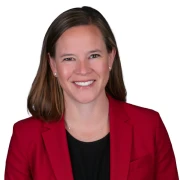

It’s a fine line Pam Johnson walks gracefully—actively contributing to the family farm, giving her time and talent to farm organizations while building her legacy and now, in her words, letting go.
For 25 years, she’s used her farm roots, passions and gift of leadership in multiple advocacy organizations. And since 1972, she’s built up the family farm with her husband, Maurice, who died in 2024.
For her achievements in agricultural advocacy, farm business innovation and industry leadership, Johnson was recognized as the 2024 Top Producer Women in Ag award winner, which was sponsored by the Farm Journal Foundation.
Bigger and Better
From their 1,150-acre corn and soybean farm in Iowa, Johnson has springboarded her on-farm experience into advocacy and leadership.
In 2013, she became the first female president of the National Corn Growers Association (NCGA)and collaborated with trade associations as well as members of Congress to work on the farm bill.
She also went on to help found MAIZALL, the International Maize Alliance of Corn Growers Associations, which included Brazil, Argentina and the U.S.
“Not many people can go from the farm to the halls of Congress and do that hard work, and fewer remember they are still from the farm and representing their friends, neighbors and fellow farmers,” says John Doggett, former NCGA CEO. “Pam never forgot that the efforts she made were not for her, but those who placed their trust in her to advocate for them.”

“I love the big picture stuff — especially when I started meeting with farmers in Iowa, around the country and around the world — it was energizing to work on the next big thing,” Johnson says.
Finding how she can use her voice and engage in the industry beyond the farm gate was something Johnson found inspiration from within at first, and then was able to quickly see how it paid off.
“When we were young and working to make a buck, a local elevator failed, and they had a bankruptcy hearing in Des Moines. Some of us went to that, and I told Maurice I was going to get up and say something because I was angry and didn’t think there would be accountability by the owner or restitution for the farmers who were devastated. I thought it was important to be an advocate for people and for my community,” she says. “And people noticed. I got up and found my voice. When you join with other people, you can make a difference.”
That experience led to Johnson being asked to help a local economic development group.
One of her champions was Helen Inman, who served on the Iowa Corn Promotion board preceding her.
“She encouraged me, even though I said I was busy,” Johnson says. “But she set the hook — she said, ‘It’s the best work I’ve ever done with the best people I’ve ever worked with,” so I said, ‘Yes, I will do it.’”
Through Johnson’s leadership on the promotion board, farmer investment in value-added agriculture and specifically ethanol grew. There are now six ethanol plants within 50 miles of her farm providing diversified markets and ownership dividends.
The role was life changing and the true springboard for her further leadership.
“There have been times when I’ve thought I was too busy, but working on things that mattered, doing meaningful work with people you like — that makes a difference,” she says. “It was said when I worked with the U.S. Grains Council that demand creation isn’t a spectator sport, and it’s the truth. You can wish and hope, but if you don’t do anything about it, it’s not going to happen.”
Her time away from the farm fostered new ideas and new opportunities.
“These experiences and getting to be friends with other farmers, we’d go to their farm, and they’d come to ours. It just made us bigger and better people,” Johnson says. “I had the luck to be exposed to the ideas and bring them to the farm.”

Seeds Planted At Home
Johnson says the greatest achievement has been building the farm business with her husband, Maurice, and now successfully transferring it to their sons, Ben and Andy.
Being around agriculture all her life, she says a focus on the future has always been at the forefront.
“My mom and dad were farmers, times were tough, and dad started working as a mechanic and ended up being the owner of the John Deere store,” she says. “And every week he had an ad in the paper and included his philosophy: the greatest crop we are going to raise is our children.”
She says farming chose her, but her first career was as a nurse. After the birth of their sons, she left nursing and worked full time on the farm.
“Everyday, Maurice and I went out the door shoulder to shoulder,” she says. “The women in this family have always been treated with equality. We sink or swim together.”
The farm had farrow to finish hogs for 38 years — exiting the hog business in 2010 and since then solely focusing on row crops.
“We survived the farm crisis of the 80s and the collapse of the hog market in 1998,” she says. “In ’98 we saw so many people go out of business, and it was survivor’s guilt, because other people were working just as hard as we were. From that we learned resilience, perseverance and keep your nose to the grindstone.”

A business focus on farm finance has been paramount, which was aided with digital recordkeeping and benchmarking with other farmers.
“Maurice was the driving force behind the farm accounting going digital, and frankly, I don’t have that in my skillset,” she explains. “It’s another lesson in life, to surround yourself with smart people and then do what you are each good at.”
She and Maurice took on senior leadership roles in the farm management, and they set the expectation both sons would go to college before returning to the farm—if that’s the future they chose.
“The beauty in having kids go away to college is beyond just the degree and education — it’s the ideas, their network and their bigger thought process they bring home,” she says.
Through a series of fortuitous events, both sons married and returned to the farm — offering additional labor resources and stepping into more management decisions with their wives. They were able to purchase nearby farms, share resources and work together.
“Each of our kids have their own land, but we tried to move forward together and work together,” she says. “We let skills, talents and passions unfold over the years. You can’t be good at everything — it helps when everyone is different, and you aren’t all clones.”
She says the goals for the farm have been continual improvement and growth of the business.
“The aim is to keep moving forward, be successful, and enjoy life and family along the way,” she says.

Pinch Me Moments
From economic development to scientific research, Johnson says, “Sometimes I sit back and smile that I had a part in making big things happen.”
One area she particularly enjoyed was the scientific research work funded by the grower associations, including genetic mapping.
“Science made my brain sparkle, so I got hooked into the research committee,” she says. “These were visionary people at the table, and while the human genome was getting mapped and the rice genome was getting mapped, we knew we had to get the corn genome mapped — to tap into the potential of what corn could be.”
Seeing the opportunity to be a champion for the project, Johnson raised her hand to go to Capitol Hill.
“We got the funding, and it was industry changing,” she says. “And now it’s moved from genomics to phenomics, and there’s still so much potential.”
A coalition builder, Johnson sought out common ground to bring groups together.
“On a trip to Argentina with officers of the U.S. Grains Council and the National Corn Growers Association, we saw common issues — trade barriers, acceptance of biotechnology and more,” Johnson says. “So, we brought together the Argentinians, the Brazilians and the American groups. We had collaboration with the three huge corn competitors on one front, but we built trust, traveled together to China, the WTO in Geneva and the FAO in Rome and worked together.”
In the moment, the work was rewarding, and upon reflection, Johnson found it empowering to think what was started.
“You’re never sure sometimes if what you did made a difference, but we planted seeds anyway,” she says. “And I think back about what we did and say, ‘Pinch me, right?’”
Johnson notes her visibility as a female farmer and woman in association leadership is and should be encouraging to others.
“If you can see it, you can be it — it’s true,” she says. “If I was going to a meeting or to an event, I wanted to be encouraging and inspiring to try to make it easier for the next person behind me.”
Johnson has been active with other advocacy groups including Common Ground, which focuses on consumer outreach, and FarmHer, which provides mentorship among female ag producers.
“There’s not much more gratifying than when I meet someone who wants to do something I am doing or have done, and they say, ‘Tell me how I can get involved.’”

Time of Transition
This year has brought a new chapter for Pam Johnson.
In 2021, her husband, Maurice, was diagnosed with pancreatic cancer. Since his diagnosis, she returned to her skills as a nurse and was his caregiver. He died on Sept. 7, 2024.
Now the matriarch of the farm, Johnson says her role continues to change. She wants to intentionally retire and fully transition to the next generation.
“At the end of this year’s harvest, I thought, I’m so lucky,” she says. “After Maurice’s funeral, we went into harvest together. And we had long hours day after day without a rain break.”
In the middle of harvest, Johnson got the sign of encouragement she needed.
“I asked Maurice to send me signs. And in the midst of harvest, we got to experience the best northern lights show I’ve ever seen. My daughter-in-law said, ‘Grandpa is with us,’” Johnson says.
She and Maurice spent their farming career in growth mode, and now is a time for change.
“Now my identity is flying solo, and I’m going to retire. I do not want to grow any older and wait to fully turn over the farm,” she says. “There are checklists, and we know what to do.”
She says she’s staying on the farm in the house she and Maurice built in 1975 from boards reused from an old corn crib, and she’ll contribute as she’s asked to.
“Now is the time to try to make things better for the seventh and eighth generation and at the same time let go,” she says.
She’s continuing to live by the words she and Maurice built the farm with: courage, resilience, perseverance, excellence and doing the right thing.




