

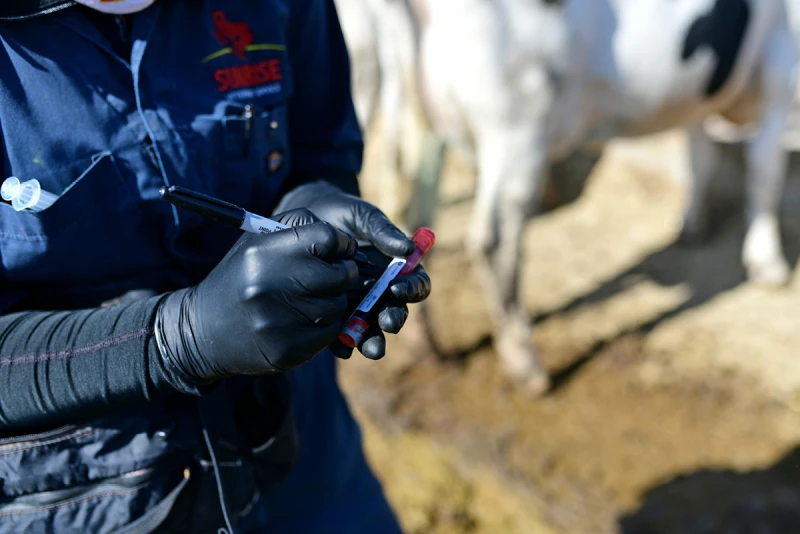
A second human case of HPAI (H5N1) was confirmed in a Michigan farmworker on Thursday, according to the Centers for Disease Control and Prevention (CDC).
This is the third human case (two in Michigan, one in Texas) associated with an ongoing multistate outbreak of H5N1 in U.S. dairy cows. In all three cases, cow-to-person spread is suspected but none of the cases is related.
Tim Boring, director of the Michigan Department of Agriculture and Rural Development, says government officials are working closely with producers to understand the scale of the virus in dairy operations across the state.
“We’re learning more every day about the epidemiology of this virus and just how it spreads. I think it’s a manageable situation on the dairy side for us right now, but we have continued concerns around just how we can best mitigate the further spread,” Boring told AgriTalk Host Chip Flory on Thursday, prior to the CDC’s latest announcement.
Boring reports that Michigan has confirmed the virus in 23 dairies, primarily in the west-central part of the state.
The virus had been confirmed in at least 66 dairy herds in nine states earlier this week, according to the U.S. Department of Agriculture: 20 herds in Michigan, 15 in Texas, eight in New Mexico, nine in Idaho, four in Kansas, four in Colorado, four in South Dakota and one each in Ohio and North Carolina.
Biosecurity Practices Are Helping
The H5N1-infected farm workers were not wearing a face shield or other personal protective equipment (PPE), according to Dr. Natasha Bagdasarian, the chief medical executive of Michigan’s health department.
That “tells us that direct exposure to infected livestock poses a risk to humans, and that PPE is an important tool in preventing spread among individuals who work on dairy and poultry farms,” said Bagdasarian, in a prepared statement.
While the Centers for Disease Control and Prevention (CDC) maintains the public health risk from H5N1 is low, the agency encourages the use of its recommended precautions by people exposed to infected or potentially infected birds and animals.
The use of good biosecurity measures is helping contain the virus and prevent its spread, Boring emphasizes.
“These biosecurity systems work; pasteurization works,” Boring says. “The screening to make sure that we don’t have infected animals of any kind with any disease making it into the food system works.
“As the FDA has talked about, this continues to be a communicable virus and where this continues to move – potentially further impacting human health down the road – is a real concern,” Boring adds. “That continues to be a driving force for us to address the virus on the animal side.”
Vaccine Development
Last week, the U.S. Department of Health and Human Services announced officials are moving forward with a plan to produce 4.8 million doses of an H5N1 vaccine for human use.
According to an article in Reuters, human exposures to the virus in poultry and dairy operations could increase the risk that the virus will mutate and gain the ability to spread easily in people.
The article noted that the U.S. and Europe are “taking steps to acquire or manufacture H5N1 bird flu vaccines that could be used to protect at-risk poultry and dairy workers, veterinarians and lab technicians, government officials said, moves influenza experts say could curb the threat of a pandemic.”
H5N1 Virus Found in Beef for First Time, FSIS Says
FSIS’ Final Results of H5N1 Testing Confirms Meat Supply is Safe
The complete conversation between Michigan’s Boring and AgriTalk Host Chip Flory is available here:



