

As the number of lawmakers with direct ties to production agriculture continues to shrink, who will step up to speak for rural America? Farm Journal is proud to present Ag Vote 2026: Who Speaks for America’s Farmers?, delivering in-depth reporting from now through Election Day. Tune in for LIVE election night coverage Tuesday, Nov. 3 at 7 p.m. Central on Farm Journal TV, Farm Journal Now, AgWeb.com and YouTube.
Input costs, trade and an unfinished Farm Bill sit at the center of Iowa’s open U.S. Senate race. With harvest under way, both candidates say farmers are being squeezed, and both say they want a seat on the Senate Ag Committee.
The seat belongs to Republican Sen. Joni Ernst, who is not seeking reelection and sits on the Senate Ag Committee. Whoever wins in November inherits an Iowa voice on the committee as the Senate takes up a farm bill.
They disagree on the cause of the farmer margin tightness. Hinson, a three-term congresswoman, points to input costs and says she has delivered for agriculture in the House. Turek, a state representative, points to the war in Iran and tariffs and says Hinson’s votes helped create the problem.
AgWeb and AgriTalk asked both candidates about their priorities for agriculture. Hinson joined AgriTalk host Chip Flory for a live interview and also submitted written answers. Turek submitted written answers.
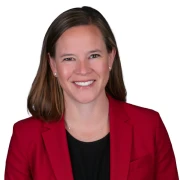
Ashley Hinson (R)
Hinson says her agenda starts with input costs, especially fertilizer. She says she has pressed USDA Secretary Brooke Rollins on the need for more domestic fertilizer production and that USDA Deputy Secretary Stephen Vaden recently heard from Iowa farmers directly.
“I know that things are tough right now,” Hinson says. “I know what’s at stake here because it is your livelihood. It’s your family’s future.”
On near-term relief, she says the most immediate help was the change to countervailing duties on fertilizer inputs. She says she is also talking with colleagues about a diesel rebate program, and she would support another bridge payment if farmers need it. Senate Ag Chairman John Boozman, R-Ark., has said another payment is needed. Hinson says she raised the idea of funding bridge payments with tariff revenue with Treasury Secretary Scott Bessent months ago and plans to check back with him.
On E15, Hinson says the House passed bipartisan legislation to allow year-round sales nationwide. She says she expects the issue to be finished after the election, once a bipartisan coalition built in the House carries it forward. She says the delay came from opposition in Congress and from leadership, including the Speaker’s no vote.
“Sometimes I have to push against our own leadership,” she says.
In her written answers, Hinson says she led the Save Our Bacon Act to protect interstate commerce for livestock producers, a key part of the House-passed Farm Bill. She also cites the Fertilizer Research Act, which she says would bring more price transparency and competition to fertilizer markets. She writes that she is a co-chair of the House Biofuels Caucus and ranked in the top 20% of House members for bipartisanship in the 119th Congress.
Hinson also opposes California’s Proposition 12 and says it raises costs for Iowa farmers. She sharply criticizes her opponent. She says Turek’s proposed 50% corporate tax rate would hit family farms organized as corporations, and that repealing the expanded estate tax exemption would make it harder to pass farms to the next generation. She writes that Turek “voted to label fake meat as real and sell it in schools” and “skipped the vote on the Iowa Farm Bill.”
Asked whether farmers still have a voice in Washington, Hinson says she relies on a farm advisory council in Iowa. “You are my experts,” she says.
Josh Turek (D)
Turek says the pressure on farmers comes from the war in Iran and from tariffs, and he ties both to Hinson’s record. He writes that Hinson voted seven times to continue the war and five times for tariffs.
“Iowa’s farmers and ranchers are uniquely hurting,” Turek writes.
His top priority is passing a Farm Bill, which he writes is three years overdue. He says he would push a provision barring Congress from adjourning until one passes. His Farm Bill priorities include nationwide year-round E15, Right to Repair and mandatory country-of-origin labeling.
On costs, Turek writes that farmers are “crushed by record-high diesel prices” this harvest. He says he has called for tapping the Strategic Petroleum Reserve, pausing diesel exports and temporarily suspending the federal gas tax, and for ending the war.
He also wants to end the tariffs, which he says may have hurt Iowa more than any other state because of the soybean market. “Our farmers don’t want handouts – they want markets,” he writes.
Turek’s second priority is competition. He writes that monopolies and vertical integration make it harder for small family farms to compete, and that century farms worry about losing their land as costs rise.
He describes a recent visit to a corn and soybean farm in Colfax, where he says a registered Republican who voted for Donald Trump in the past is now supporting him. He says the farmer took him up in the combine and described how tariffs and fuel prices are squeezing the operation.
On bipartisanship, Turek writes that he has voted with Republicans more than 700 times in the Iowa Legislature and helped pass a bipartisan Right to Repair bill through the Iowa House last session.
“Farmers across Iowa are telling me the same thing: Washington has failed them and they are ready for change,” he writes.
Ernst’s Ag Record: Five Moves That Defined Her Tenure
- 2026 farm bill vote. In mid-September, Ernst voted with Republicans to advance the Agriculture Act of 2026 out of the Senate Ag Committee on a 12-11 party-line vote. The bill includes year-round E15. “Today’s vote moves the Farm Bill process forward,” she said, adding that more bipartisan support is needed to pass a five-year bill.
- Prop 12 push. At that markup, Ernst tried to add language barring state and local governments from regulating agricultural production methods, a fix aimed at California’s Proposition 12. Chairman John Boozman refused, saying he had closed the bill to amendments. Sen. John Hoeven urged her to raise it when the full Senate takes up the bill. Ernst has called for “a long-term solution to Proposition 12.”
- Biofuels and the 2025 tax law. Ernst’s office says she helped introduce the Farmer First Fuel Incentives Act and got it into the One Big Beautiful Bill. Her office says it extended the 45Z clean fuel credit and prioritized domestic feedstocks. DTN reports the law extended 45Z through 2029 and limits it to U.S., Canadian and Mexican feedstocks. The law also raised PLC and ARC reference prices.
- Record biofuel blending levels. In March, Ernst joined President Donald Trump at a White House event as EPA finalized record 2026-27 renewable fuel volume requirements. She said she was “thrilled to have helped deliver the highest levels of biofuel blends for our nation’s fuel supply” and called for Congress to pass permanent, year-round E15.
- 2018 farm bill. Ernst was one of nine senators named to the conference committee for the 2018 farm bill. Four of her bipartisan bills were in the Senate version: an ARC-County fix with then-Sen. Heidi Heitkamp, D-N.D.; the GROW Act on conservation programs; the Regional Conservation Partnership Program Improvement Act with Sen. Debbie Stabenow, D-Mich.; and the FARMERS FIRST Act on farmer mental health with Sen. Tammy Baldwin, D-Wis.



