
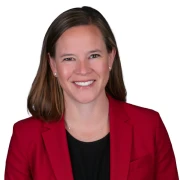


Tim Nuss doesn’t just wear many hats; he’s building entirely new racks to hang them on. While he serves as the CFO of Nuss Farms in California, managing a diverse array of crops from garlic to pumpkins, his role includes financial management, sales, marketing, business development and strategy on the farm. But it also includes three complementary businesses he’s started or helped build as a strategy to diversify and de-risk.
For his achievements in the business of farming, Nuss was awarded the 2026 Top Producer Next Gen Award, sponsored by Fendt and Pioneer.

From “Going All In” To Diversification
On the very northern edge of California’s Central Valley, Nuss Farms grows up to 10 different crops every year. But the diversity of the farm isn’t just in what they produce — it’s how the farm propels forward. And it was a lesson carried forward by Nuss’ father, Dave.
The family’s history with asparagus, which faced a collapse due to NAFTA and global competition, serves as a cautionary tale.
“With our coastal influence and cool nights, the California Delta was the perfect growing environment for asparagus. In the late 1990s and early 2000s, there were around 36,000 acres within the state at its peak. During this time, dad scaled up the operation, took on debt to build a packing house and operated as a fully integrated grower, packer and shipper,” Nuss explains.
With the post-NAFTA shift of production to Mexico and Peru, the California market disappeared over the course of a couple seasons. The packing business was a casualty of this, and today there is almost no commercial asparagus production in the state.
Nuss, the middle son, says he “wanted to get as far from the farm as possible,” and went to get a business degree. He then worked in the fresh produce industry for 10 years and a few years in ag technology before feeling called back to the farm.
Today, Nuss emphasizes the family’s approach to growing a variety of crops ensures that if one market fails, other crops can offset the damage. And he takes some credit to continuing to encourage the farm to experiment and adapt to market conditions.
“We weren’t doing basil, watermelons or pumpkins before I joined,” he says.

Not Every Idea Works, Entrepreneurial Trial and Error
Nuss readily says he has pushed his family’s farm to experiment with regenerative practices. But that doesn’t mean everything has stuck.
“We converted 100 acres to organic. That really left us with egg on our face with dad and Derek,” Nuss says. “We just assumed there would be demand. But after offering organic as an option to our buyers, none were interested. There was either an agronomic reason why it wasn’t a fit, they were oversupplied or didn’t handle entirely.”
The farm benefits from the different leaders and perspectives. Unified with the strategy to diversify and de-risk, new ideas are met with healthy skepticism and a fair shake.
And even if the family didn’t fully implement a practice, they always take away a lesson — or a story for family lore.
“We tried to do a livestock integration and planted permanent pasture for poultry,” Nuss says. “The challenge was the buyer wanted year round. So that meant our family was moving a chicken coop on Christmas morning. It was terribly wet, but the coop had to move, and we brought in a D7 dozer to get it through the field.”
The narrative is one of “learning by doing.” Nuss is candid about past failures and says these experiences have shaped a more calculated, “systems-thinking” approach to new ventures, blending corporate structure with startup agility.
“Success, for me, is just showing up every day and building. The only real failure is not giving something enough time to work. So I’m heads down in building mode. Always in farmer mode,” he says.
“Success, for me, is just showing up every day and building. The only real failure is not giving something enough time to work. So I’m heads down in building mode. Always in farmer mode.”

Precision Management and Modernization
The daily operations of Nuss Farms have changed to increase efficiency and opportunity. The operation has moved away from traditional flood irrigation toward high-tech precision, with 80% of the farm using subsurface drip.
“Being in the northern Central Valley, it’s a unique zone in the California Delta. We have all fresh surface water, but we can drive a boat from our farm to the San Francisco Bay,” Tim Nuss says.
Nuss Farms is located on Terminous Tract. During the winter, rain water drains to the low part of the tract and is pumped back to the Delta.
Moving away from flood irrigation to subsurface drip tape has increased water use efficiency and unlocked new production practices, allowing for spoon-feeding nutrients directly to the root zone.
The farm has also installed soil moisture probes and on-farm weather stations. Additionally, they invested in conservation practices such as planting riparian wildlife habitat and native hedgerows on the farm.
Another strategic operation decision is not maintaining a physical office. Before joining the farm full time in 2022, Nuss worked to automate and digitize much of the back office operations. Since he’s pushed toward a paperless operation, there was no need for a physical office space. Nuss lives about 1.5 hours away but is on farm two to three days a week.
“This is where I could bring in the corporate perspective and lean on some of the systems and structure companies have in place,” he says. “I also brought the outside perspective of working in startups to how we can iterate and innovate quicker.”

The Flywheel of Media and AgTech
Another contribution Nuss has brought to the farm’s management is his entrepreneurial mindset. It’s resulted in him splitting his time between the farm, a podcast (which he cohosts with younger brother Tyler for 12,000 monthly listeners), an online product intelligence platform and a water/utility monitoring technology company (which Tyler is the CEO). Nuss views their non-farming activities — the Modern Acre podcast, AgList and Yield Energy — not as distractions, but as a “flywheel.”
The podcast provides access to industry experts and builds credibility. Over the past eight years, they’ve talked to hundreds of leaders across agriculture and have released more than 450 episodes.
“There are definitely people we’ve got to talk to that otherwise would not have taken our call,” he says. “We’ve learned from people and about new products we wouldn’t have otherwise had access.”
Another bootstrapped project was AgList, which was launched in 2025 and built using sponsorship money from the podcast. AgList was started off a need Nuss and Tyler saw firsthand on their farm navigating how to adopt biologicals. Their two biggest challenges were discoverability of new products and lack of trust, so that’s what the platform helps solve. Nuss describes it as an online trust layer for biological products, allowing farmers to research what products could be a good fit for them and also learn from each other.
“As a farmer, we wanted a business that isn’t subject to the weather, so an internet-based company was the idea,” he says.
The third off-farm business is an example of creative entrepreneurship. Although he has a part-time role on the farm, Tyler wanted to transition into agriculture full time. The brothers found a unique energy services company whose leaders were looking to take a step back from day-to-day operations and bring on new leadership. Nuss and Tyler relaunched the company as Yield Energy, which is a demand response aggregator and distributed energy resources platform. Yield Energy is a platform for utility companies to pay farmers to turn off irrigation pumps during peak energy consumption periods. The company has 200MW of controllable ag load in California, is partnered with nine irrigation automation OEMs and is currently expanding to new states.

Family Dynamics and Legacy
The farm is a blend of distinct personalities: the innovative, entrepreneurial father; the traditional, “old school” older brother; and the tech-forward, corporate-experienced younger brothers. Success is measured by the ability to keep the farm viable for the sixth generation while evolving the business model beyond what’s been known as traditional.
With all of his many roles and responsibilities to build the Nuss Farms business more resilient than ever, when asked what his job is, Nuss responds, “I help run my family’s farm in Lodi.”
Nuss is a strategist, a communicator and a builder who isn’t just waiting for the future of agriculture to arrive — he’s actively designing it. By blending tradition with entrepreneurship, Nuss proves returning to the family farm doesn’t mean doing things the old way. It means finding new ways.



