
Such an easy question; but as always so difficult to answer. Some advisors may suggest they have a proven system to predict market price action; I don’t. My game plan is to focus on the profit margin the market is offering. When it reaches your target, you should sell it and then defend if a technical reversal signal is experienced.
I’m currently working with my brokerage clients to try to develop at least a 10-year history of costs and revenue to come up with a net gain per acre. My review of USDA historical data suggests even though we are well off the $4.50 winter highs in December corn we are still above the $120/acre above all cost. While this is a long way from the $200/acre offered last December, it is still the fourth highest return on investment since 1973! An even more chilling statistic is, since 1999 the market in terms of trading days, has spent about as much time above $200/acre as it spent below -$100 per acre. On top of that since late 2007, we have not had a really negative return in corn. I belief the corn market is a pure competition economy, which over the long-term (I would say 5 years) will even out and eventually net returns in agriculture very close to the breakeven level.
My concern is we have all fallen in love with the 2008 and 2009 profits offered by the intersection of growing ethanol demand, growing China demand, growing interest of outside money and reasonably tight stocks. One has to ask himself the following question: Was the 2008 and 2009 price event an exception or the general expectation for the future? While I expect ethanol and China demand to be big positives for the future, they are no longer big surprises. The market knows about them and the bigger demand has been factored into the market. On the other hand, the high prices of 2008 to now, coupled with lower input costs, should stimulate producers to increase production. The question then becomes, even with long-term demand growth, can supply on a global basis over take with good weather and improving technology? This is a question we will debate on a yearly basis. All I can say is my gut tells me that agriculture has been making way too much money recently and over time it will be taken away with more supply relative to demand.
BEFORE TRADING, ONE SHOULD BE AWARE THAT WITH POTENTIAL PROFITS THERE IS ALSO POTENTIAL FOR LOSSES, WHICH MAY BE VERY LARGE. YOU SHOULD READ THE “RISK DISCLOSURE STATEMENT” AND “OPTION DISCLOSURE STATEMENT” AND SHOULD UNDERSTAND THE RISKS BEFORE TRADING. COMMODITY TRADING MAY NOT BE SUITABLE FOR RECIPIENTS OF THIS PUBLICATION. THOSE ACTING ON THIS INFORMATION ARE RESPONSIBLE FOR THEIR OWN ACTIONS. ALTHOUGH EVERY REASONABLE ATTEMPT HAS BEEN MADE TO ENSURE THE ACCURACY OF THE INFORMATION PROVIDED, UTTERBACK MARKETING SERVICES INC. ASSUMES NO RESPONSIBILITY FOR ANY ERRORS OR OMISSIONS. ANY REPUBLICATION OR OTHER USE OF THIS INFORMATION AND THOUGHTS EXPRESSED HEREIN WITHOUT THE WRITTEN PERMISSION OF UTTERBACK MARKETING SERVICES INC. IS STRICTLY PROHIBITED. COPYRIGHT UTTERBACK MARKETING SERVICES INC. 2010.
Is it Time to Sell Corn?

Related Stories

Learn marketing and social media strategies for building trust and driving attention and bids to your auction, and find out how farm size and farmer preference are driving used corn head buying and selling activity.
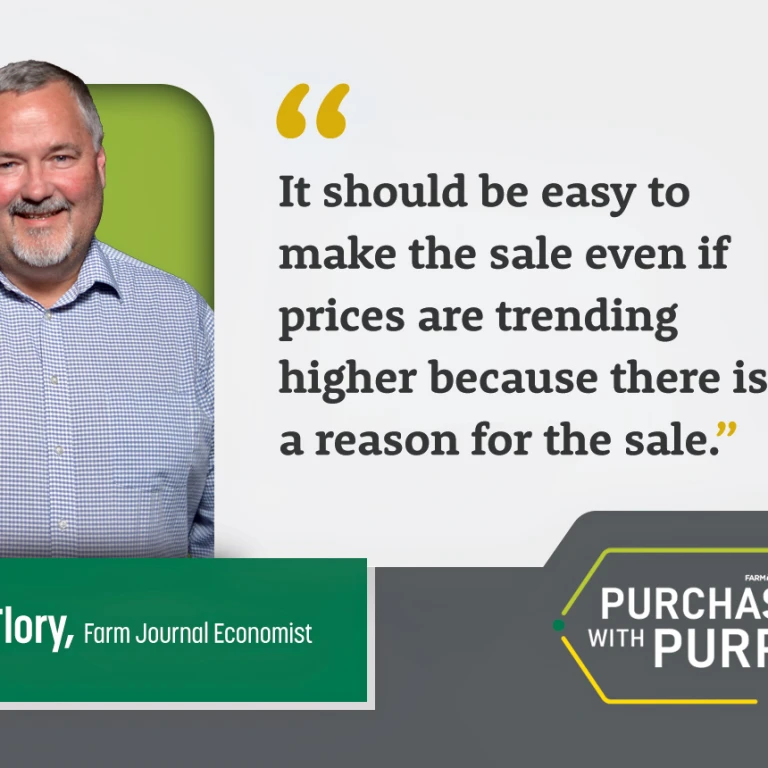
If you have a long-term plan that includes goals for your business, and if making cash sales helps to advance your business toward reaching those goals, cash sales should be a celebration.

Read Next

Dozens of ag champions and producers will leave Washington following the midterm elections. History suggests their firsthand experience won’t be easily replaced — leaving rural America’s voice hanging in the balance.


Commodity Market Futures
Futures prices on grains, livestock, oil and more

Farm Journal TV
Trusted ag insights and real stories from rural America. Start your free trial today.

Pro Farmer
Join Pro Farmer today to access trusted market intelligence and expert analysis that help you make more confident decisions.
