
Dairy Cattle

Even after losing a major export market, the U.S. bovine genetics industry bounced back in 2025.

From beef-on-dairy calves fetching record prices to $11 billion in new processing plants, U.S. dairy is riding a wave of momentum fueled by consumer demand for protein and historic levels of investment.

The equipment builder is adding to its lineup of crop harvesters with two new forage choppers — the first completely new silage management machines from Deere since 2019.

Whether it’s pork, beef or chicken, consumers can’t seem to eat enough protein. That’s fueling robust demand and prices for livestock producers.

Water scarcity is an enduring issue demanding innovative solutions, and Washington’s dairy farmers are just one of many states that are on the frontline of this battle.

NCBA’s Woodall says the goal is complete eradication — not just from the U.S., but from Mexico and Central America, ultimately pushing the fly back to its original range in South America.

A sneak peak of Farm Journal’s leading-edge survey insights illustrates strategic solutions that generate renewed confidence, ensuring a promising path forward for the industry.

Sec. Mike Naig says the U.S. government is using what he describes as a three-legged stool approach to address the virus in the dairy and poultry industries.

The report echoes calls by other scientists to ramp up the surveillance of felines, which are susceptible to the virus and have a high mortality rate. The AVMA says several cases in cats linked to poultry or wild bird exposure had been reported before the outbreak began in dairy cows last spring.
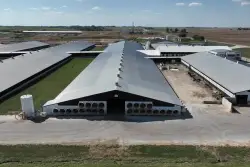
A decade into the partnership, GenoSource has grown into more than the original partners ever imagined. The dairy now involves eight families, who all love Holsteins and share a goal of creating a more sustainable future for the next generation.

As 2024 comes to an end, roughly 70% of the U.S. is experiencing some level of drought and dryness. What does that mean for 2025? According to one meteorologist, in six of the past 10 years with a really dry fall, the spring to follow was also dry.

Nearly half of all farmworkers are undocumented, and industries such as dairy and meatpacking plants are especially vulnerable to labor shortages.

Nothing goes to waste on the 6,000 acres of Royal Family Farms.

Parts of the Texas Panhandle, Kansas and Nebraska could get some rain as early as this weekend. Other parts of the Midwest might have some moisture relief as well by early next week.

Lexi Anderson is a spirited kid who’s always supporting those around her. But Lexi’s big heart is now what’s needing saved, and it’s a constant showing of love and support that’s getting this family through.

Kansas, Nebraska, New Mexico and Texas are participating in the voluntary pilot program. Additional testing for the virus is also underway in aged raw-milk cheese, cream cheese, butter and ice cream.

Shared employment, housing and movement of employees between facilities are possible factors. Such insights could potentially be leveraged to address biosecurity needs in the state and others as well, the agency says.

USDA is launching a new initiative to compensate dairy farmers for milk losses caused by H5N1,marking potentially the largest economic aid for the dairy industry to date.

According to FDA, the additional testing confirms the safety of the commercial milk supply with what it calls substantial data. The tests were done on 297 samples of milk from 38 states.

Federal officials are seeking to verify the safety of milk and meat after confirming the H5N1 virus in nine states since late March. The public health risk is low, but is higher for those exposed to infected animals.

The agency will provide reimbursement for testing at an approved National Animal Health Laboratory Network laboratory.

The livestock industry needs a comprehensive, cohesive plan to address the virus. Producers, their employees and veterinarians need clear answers and support from U.S. agricultural leadership, moving forward.

USDA said this week cow-to-cow transmission is a factor in the spread of avian flu in dairy herds, but it still does not know exactly how the virus is being moved around.

South Dakota Dairy Producers encourages all dairy producers to closely monitor their herd and contact their herd veterinarian immediately if cattle appear symptomatic.

In an effort to prevent domestic cattle from being exposed to Bovine Influenza A Virus (BIAV), 17 states have restricted cattle imports from states where the virus has infected dairy cows.

Kay Russo, DVM, Novonesis technical services manager for dairy and poultry, emphasized the situation is rapidly evolving and more clarity will come with time as researchers learn more.

Sid Miller, commissioner of the Texas Department of Agriculture, says the risk of highly pathogenic avian influenza impacting beef cattle in the state’s panhandle – where dairy cows have been infected – is minimal.